Short answer: the most important swimwear fabric tests are colorfastness to chlorine, sunlight and washing, plus tensile strength and dimensional stability. YucaiFJ runs these tests in its in-house lab before production so your product matches the quality you promise customers.
Learn more: our quality control and testing process · Related: choosing swimwear fabric.
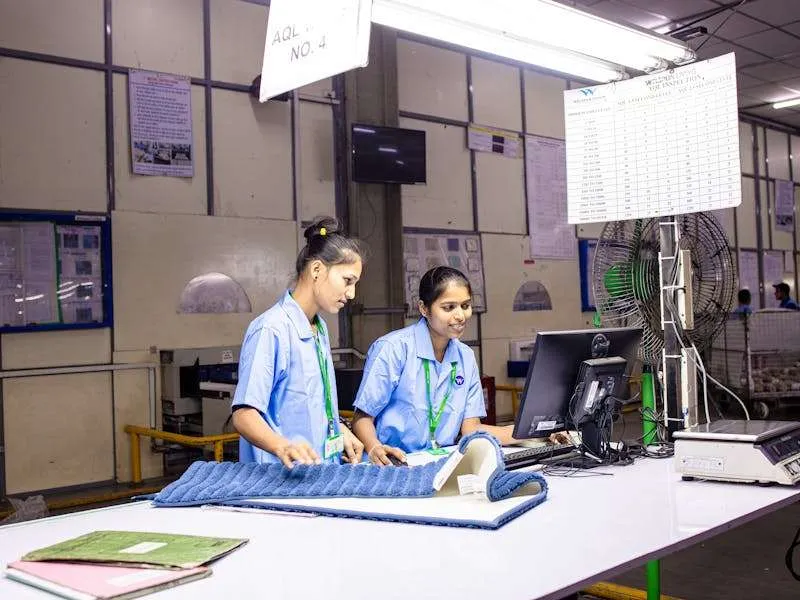
If you are building a swimwear brand, testing is not just a factory checkbox. It protects you from returns, compliance problems and brand damage.
Why Fabric Testing Matters
Swimwear faces chlorine, salt water, sunlight, sunscreen and repeated washing. Fabric that fails on colorfastness or strength will come back as customer complaints, chargebacks and negative reviews.
Testing before production tells you:
- Whether the color will fade in chlorine or sunlight
- Whether the fabric holds its shape after washing
- Whether the material meets your quality claims
- Whether certifications like OEKO-TEX or REACH can be supported
Key Tests to Know
| Test | What it checks | Why it matters |
|---|---|---|
| Colorfastness to chlorine | Color retention in pool water | Bikinis and swimsuits must survive regular pool use |
| Colorfastness to light | Fade resistance in sunlight | Colors stay true on the beach and in the store |
| Colorfastness to washing | Color retention after washing | Prevents bleeding and fading complaints |
| Tensile strength | Fabric resistance to tearing | Garments hold up during wear and use |
| Dimensional stability | Shrinkage and shape after washing | Sizes stay consistent after care |
What to Request From Your Factory
Before bulk production, ask for:
- Fabric test reports from the mill or factory lab
- Confirmation that tests use your approved fabric
- Certification documentation where applicable (OEKO-TEX, REACH)
- Colorfastness results for chlorine, light and washing
- Dimensional stability results against your size chart
How YucaiFJ Handles Testing
YucaiFJ operates a quality control lab with fabric tensile strength, color fastness, chlorine resistance and dimensional stability testing. Three-stage AQL 2.5 inspection is applied to production, and OEKO-TEX and REACH documentation is available for approved programs.
Standard Test Methods to Put in Your Requirement Sheet
Swimwear buyers in the EU and Australia usually expect tests to follow a named standard, not just “the factory tested it”. When you request fabric tests, reference the method so the result is comparable and defensible if a retailer asks.
| Property | Common method | What a good result looks like |
|---|---|---|
| Colorfastness to chlorine | ISO 105-E03 | Grade 4+ out of 5 after the specified soak |
| Colorfastness to light | ISO 105-B02 (Xenon) | Grade 4+ for fashion, 5 for performance lines |
| Colorfastness to washing | ISO 105-C06 | Grade 4+ with no staining of adjacent fabric |
| Colorfastness to rubbing / crocking | ISO 105-X12 | Grade 3-4+ dry and wet |
| Tensile strength | ISO 13934 | No tearing at normal construction tensions |
| Shrinkage / dimensional stability | ISO 6330 / AATCC 135 | ≤ 5% after 5 wash cycles |
| Seam slippage | ISO 13936 | No visible gap at 80 N load |
Ask your factory for the lab dip test report at development and the bulk fabric test report before production. These are two different reports: the first confirms the color match, the second confirms the production lot.
Why Testing Is a Retail-Compliance Issue, Not Just Quality
Testing is not only about whether the suit survives a summer. EU retailers and marketplaces increasingly reject garments with unverifiable colorfastness or shrinkage claims. A failed shipment means chargebacks, return freight, and a damaged listing. For brands selling in Europe, REACH-compliant dyeing is now table stakes, and OEKO-TEX documentation makes your quality claim auditable. Test reports also protect you from your factory: if a batch arrives and the color has migrated between panels, a report with a named standard tells you exactly where the claim breaks.
Common Colorfastness Failures and How to Avoid Them
- Print bleeding between panels. Often caused by poor print fixation on nylon. Ask for a crocking test on the printed area, not only the plain fabric.
- White linings turning blue or red. A sign the dye was not fully fixed before finishing. Confirm washfastness of the lining separately.
- Fading after the first pool visit. Usually a chlorine-resistance failure on a polyester print or a low-quality dyestuff. Specify ISO 105-E03 before bulk dyeing.
- Shrinkage after the first wash. Usually a finishing issue. Request ISO 6330 shrinkage results on the exact construction you will produce, including elastane content.
These failures are all preventable at the lab-dip and pre-production stage, which is far cheaper than a rejected shipment.
How Often Should Fabric Be Tested?
- Lab dip stage: color match and basic colorfastness.
- Pre-production: full test set on the approved fabric lot.
- Bulk: spot checks per dye lot, plus final inspection.
- New fabric source: full re-test, even if the old source passed.
YucaiFJ runs incoming, lab and final checks in-house and can supply reports with named standards on request.
Requesting Fabric Tests: The Email Checklist
Use this checklist in your development brief so the factory quotes and schedules the tests instead of guessing:
- Name the standards (e.g. ISO 105-E03 for chlorine) rather than saying “test the color”.
- Ask which report is provided: lab dip report, bulk report, or both.
- Confirm whether the report is from the mill or from the factory’s own lab.
- State the pass grade you will accept (typically 4+ out of 5).
- Ask for the test on the exact construction and dye lot you will produce.
A written requirement protects both sides: the factory knows what to deliver, and you have a benchmark for the pre-shipment check.
Test Budget and Timing
Fabric tests are a small, predictable cost compared to a rejected shipment. In practice a full colorfastness and physical set costs a fraction of the sample fee and takes 3-7 days. Plan it into the development timeline, not after production starts. If a retailer later asks for documentation, having named-standard reports ready turns a compliance question into a sales point for your brand.
Who should pay for fabric testing?
In B2B swimwear production the buyer usually pays for the test service when it is requested beyond the factory’s standard process, while the factory absorbs routine incoming checks. Agree the split in writing at the quotation stage, and ask for the test scope and standard to be itemized so you are not charged twice for the same check.
FAQ
Do you test fabric before production?
Yes. YucaiFJ tests fabric for tensile strength, colorfastness, chlorine resistance and dimensional stability in its in-house lab.
Can you provide OEKO-TEX or REACH documentation?
Yes. Certification documentation is provided where applicable for approved production programs.
How do I know my color will not fade?
Request colorfastness test results for chlorine, light and washing before approving bulk production.
Do you test every batch?
Production follows three-stage AQL 2.5 inspection, and fabric is tested as part of the incoming QC process.
Test Your Fabric Before You Commit
Send us your fabric requirements and target market, and we will confirm the test plan and documentation for your order.
- Email: [email protected]
- WhatsApp: +86 159 6009 9446
Swimwear Fabric Guide | Swimwear Fabric Certifications | AQL Inspection Guide | Contact