Quick Answer
Starting a swimwear brand in 2026 takes 3–6 months from idea to first stock. Budget realistically: $1,200–$2,000 all-in to sample 1–2 hero styles, or $2,500–$4,000 for a 3–5 style micro-collection — each range includes tech packs, custom print setup, two sampling rounds and express freight (DHL/FedEx). You can start with as few as 50 pieces per style, test demand, then reorder your winners. The fastest path: pick a niche, collect inspiration images, let a factory’s ODM team build the tech pack, finish sampling in 1–2 rounds, then order a small first batch and reorder what sells.
From a Factory Floor to You: 15 Years of What Actually Works
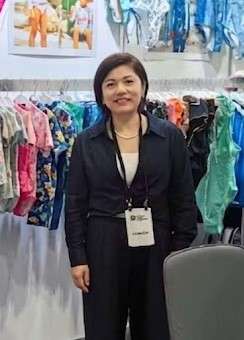
Lily Yu — General Manager, YucaiFJ (Fujian Yucai Industrial Development Co., Ltd.)
Production director at YucaiFJ — 15 years in swimwear OEM/ODM manufacturing in Fujian, China.
🔗 Lily Yu on LinkedIn · 📧 [email protected] · Factory & Certifications →
Hi, I’m Lily Yu, production director at YucaiFJ — a certified swimwear factory in Fujian, China (No.25 Suian North Road, Zhangpu County, Zhangzhou 363200). Connect with me on LinkedIn, or find our factory on Google Business Profile, if you want to verify who you’re working with. For 15 years I’ve watched first-time swimwear brands make — and avoid — the same costly mistakes: spec sheets that factories can’t build from, hardware that rusts after one season, and MOQs that quietly bankrupt a young brand. This guide is the honest version I wish every new buyer read before emailing a factory.
Step 1: Choose Your Starting Business Model
Before you design anything, decide HOW you’ll sell. This choice decides your margins, your speed and your failure risk. In 2026 there are three popular paths — and only one fits a brand that wants real product quality:
| Model | What it is | Typical return rate | Profit margin | Best for |
|---|---|---|---|---|
| Print-on-Demand (POD) | Platform prints your design on demand | 15–20% (fit/fabric complaints) | Thin (platform takes a cut) | Testing demand with zero risk |
| Customisable blanks | Factory’s ready-made styles, you add print | 10–15% (sizing mismatch) | Medium | Fast first launch |
| Low-MOQ factory custom (our path) | Factory develops YOUR design from inspiration to sample | 3–5% (fit-tested to your size chart) | Highest (own the design) | Building a real brand |
That return-rate gap is why serious DTC brands move to custom development: a fit-tested product means fewer refunds and more repeat orders.
My honest take after 15 years: POD feels easy but dies on quality and returns. Blanks are fine for testing but everyone uses the same styles. If you want a brand that lasts, custom development from 50 pcs is the sweet spot — you own the design, and we make it cheap enough to start.
Step 2: Define Your Niche and Range Structure
Your niche decides design, sizing and price. Pick ONE segment first — brands that try to be everything sell nothing.
| Niche | Why it works | Sizing focus |
|---|---|---|
| High-waisted retro bikinis | Strong social-media aesthetic | US / UK standard |
| Plus-size swimwear | Underserved, high loyalty | US plus sizing |
| Sustainable swimwear | Premium price, GRS story | EU / AU |
| Kids and family sets | Repeat purchases | Kids plus parents |
| Performance swimwear | Recurring demand | Athletic fit |
Insider tip: don’t build a line of only bikinis. Add cover-ups, sarongs and beach dresses in the same print — the add-on sale lifts average order value by 30–50% and fills the off-season. See our resort & cover-up range →
Step 3: Source the Soul of Swimwear: Fabrics & Hardware
Fabric is 40–55% of your unit cost and 100% of your brand’s feel. Three fabrics cover most of the market:
| Fabric | Typical weight | Best for | Note |
|---|---|---|---|
| Nylon + 20% spandex | 190–220 GSM | Soft bikinis, rich color | Premium hand-feel |
| Polyester + 15–20% spandex | 200–230 GSM | Print-friendly, durable | Best for sublimation |
| PBT (chlorine-resistant) | 230–260 GSM | Performance / training | Holds shape in pools |
| Recycled nylon / polyester (ECONYL® / Repreve®) | 190–230 GSM | Sustainable lines | GRS-certified, same feel as virgin |
All YucaiFJ fabrics can be supplied with UPF 50+ UV protection and OEKO-TEX Standard 100 certification. If you’re building a sustainable line, ECONYL® regenerated nylon keeps the premium feel without virgin plastic.
Verified, not just claimed: YucaiFJ holds ISO 9001:2015, OEKO-TEX Standard 100, BSCI and WRAP. You can verify us through the official registries: look up our OEKO-TEX Standard 100 listing via Oeko-Tex’s certificate search and our social-audit status via amfori BSCI’s member search. We also share certificate numbers and audit reports on request before bulk — and we invite every serious buyer to a live video factory tour. See the certifications on our factory page →
Don’t overlook packaging compliance: if you use recycled fabrics (ECONYL® / GRS), keep the GRS claim accurate and documented. For polybags, the EU applies packaging EPR rules and the US requires suffocation-warning labels. Your factory should source compliant polybags and hang tags as part of the private-label package.
Hardware is where beginners get burned. Cheap zippers and metal hooks rust after a few hours in seawater and get painfully hot in the sun. At YucaiFJ we only use anti-salt-spray tested hardware — a detail most buyers don’t think about until their first customer complains.
Don’t choose fabric from a screen. We’ll mail you a free physical swatch set (including OEKO-TEX and GRS recycled options) so you can feel it yourself before you commit. Request your free fabric & color swatches →
Step 4: The Tech Pack Shortcut — No Drawing Skills Needed
Most new buyers panic at “tech pack”. Here’s the secret: you don’t need to draw one. A tech pack is just the factory’s recipe — flat sketch, size chart, fabric, trims, stitching notes. If you can collect inspiration images on Pinterest or Instagram, you’re 90% there.
There are a few honest ways to get a tech pack without drawing it yourself: hire a freelance technical designer on Upwork or Fiverr ($150–$500 per style), use a tech-pack template (many are free), or work with a factory that provides ODM development. If you produce with YucaiFJ, our in-house ODM team builds the tech pack from your mood board — we extract the silhouette, seam types, grading increments and construction details from your reference images, then develop the sample. That’s the custom design development service we run for brands every week.
For brands who want to grow into it: even with a factory-built tech pack, you’ll eventually own the key measurement points (POMs) — bust, underbust, waist and hip with their grading rules. Confirm these with the factory before bulk, because a 1cm grading error across sizes becomes a return problem in your market.
One swimwear-specific detail that saves you a whole return wave: specify stitch elongation in your tech pack — e.g. 100% stretch recovery for flatlock seams and the right zig-zag on elastic edges. If this is missed, leg openings snap when the customer puts the suit on, and you eat the returns. It’s exactly the kind of spec a dedicated swimwear factory catches before it reaches you.
Want to see what a proper swimwear tech pack looks like?
Download Free Tech Pack Sample (PDF) →
A real high-leg vs. cheeky-cut spec, including the POM table we send every client.
Step 5: Vet Your Manufacturer Like a Pro
This step makes or breaks your brand. Six checks:
- Swimwear experience — years in swimwear, not just “garments”
- Certifications — ISO 9001, OEKO-TEX, BSCI or WRAP
- Capacity — can they do 50 pcs now and 5,000 later?
- Quality system — do they inspect against AQL 2.5?
- Communication — one dedicated contact, reply within 24h
- References — real brands and their regions
Pro tip: ask for factory floor photos or a video call. A real factory shows its sewing line and QC room without hesitation. See how YucaiFJ inspects with AQL 2.5 →
Verify the paper trail: a real factory can share its OEKO-TEX Standard 100 certificate number and third-party audit report (BSCI / WRAP / SMETA) for you to verify online. If a supplier can’t produce a certificate number or a live video tour, treat that as a red flag.
Our actual production line at YucaiFJ — the same sewing, QC and packing stations we show every buyer on a live video call. This footage includes our ISO 9001:2015 QC process and an AQL 2.5 final-inspection station.
Step 6: Sample, Fit, and Refine
Expect $50–$100 per style for sampling and 7–10 working days per round. Industry average is 5+ revision rounds; a good factory finishes in 1–2 because they check fit against your size chart before shipping. Fit-test on 3 different body types — sizing errors are the #1 cause of returns in swimwear.
Sample pitfalls that cost brands real money: test your swimwear sample wet and dry — water weight strains shoulder straps and can pull a bikini down an entire cup size. Check stretch recovery after 24 hours of tension (a strap that stays stretched is a defect), and swim-test chlorine-resistant styles in actual pool water, not just tap water. These are the checks our own sample room runs before any style ships to a buyer.
A real story from our floor: last season a California startup shipped 200 first-batch suits before anyone noticed the flatlock seams had lost their stretch recovery after a week of tension — every leg opening snapped during their first fit shoot. We fixed it by switching to a high-recovery PBT thread and re-cutting the affected styles, but the brand lost a launch week. That’s why we now run a 24-hour stretch test on every sample before approval. It’s the kind of near-miss you only catch working inside a factory.
Step 7: Leverage the MOQ Strategy and Launch Profitably
Order a small first batch, test, then reorder the winners at 3–4× quantity. Standard swimwear MOQs:
- Regular fabric: 50 pcs per design across 3 sizes
- Sustainable / recycled: often 100 pcs per color
- Custom print / sublimation: 100+ pcs (print setup amortizes)
Pricing formula that works:
Landed cost = production cost + international freight + import duties
Retail price = (landed cost ÷ 0.45), rounded to a .95 point
Example: $12 landed cost → $12 ÷ 0.45 = $26.67 → $26.95 retail
Worked example: a bikini with $10 production cost + $3 freight & duties = $13 landed cost → $13 ÷ 0.45 = $28.89 → $28.95 retail. The /0.45 multiplier leaves room for platform fees, returns and a healthy margin. Dive deeper into MOQ strategy →
Don’t forget freight and duties: US swimwear imports fall under HTSUS Chapter 61 (rates vary by country), and EU imports may face VAT and REACH documentation. Freight per piece varies by mode: express air (3–5 days) ≈ $3–$5 per piece for a 50-piece order, while sea freight for 300+ pieces drops to ≈ $0.80–$1.20 per piece. Ask your factory for a DDP door-to-door quote so customs handling is included — it makes your landed-cost math predictable.
And budget for customer acquisition: DTC swimwear customer acquisition cost (CAC) in 2026 typically runs $15–$30 per order on Meta/TikTok. Reserve roughly 30–40% of retail price for ads, platform fees and returns — that’s why the /0.45 formula works: it leaves room to actually sell profitably.
What Our Clients Say
“Fabric quality has been consistent across three production runs. The three-stage AQL inspection reports gave us real confidence.”
— Online swimwear brand, Australia (anonymous under NDA)
“Our resort set went from sketch to samples in about a week. Lead times matched the schedule they promised.”
— Resort collection buyer, United States (anonymous under NDA)
More project stories on our customer success page →
FAQ
How much money do I need to start a swimwear brand?
$1,500–$3,000 covers sampling 3–5 styles; $3,000–$8,000 covers your first 50–300 pcs batch. Marketing and photography are extra.
Can I order fewer than 50 pieces?
At YucaiFJ, yes — our low-MOQ program starts from 50 pieces per colorway for first orders. Below that, samples are usually the only option.
I can’t draw a tech pack. Can you still work with me?
Yes. Send your inspiration images (Pinterest board, photos, even a rough sketch) and our ODM team will build the tech pack and develop the sample for you — no designer needed, and no upfront fee for the tech pack when you produce with us.
Do you sign NDAs before we share designs?
Yes. We routinely sign NDAs and non-circumvention agreements before any design or supplier information is shared.
How long from design to delivery?
Sampling 2–3 weeks + bulk 35–45 days + shipping 2–4 weeks (DDP door-to-door) ≈ 2.5–4 months total.
Does a DDP quote include import duties for the US or EU?
Yes. A true DDP (Delivered Duty Paid) quote includes freight, insurance, customs clearance and import duties paid to your door — no surprise charges when the shipment arrives. Ask your factory to confirm the Incoterm in writing before you approve.
Do I need to worry about EU / US compliance?
Yes, and the specifics matter. Quick checklist:
| Market | Rule | What to check |
|---|---|---|
| US — all garments | FTC fiber/country labels | Labels sewn permanently into the garment |
| US — kids’ swimwear | CPSIA | No drawstrings at hood/neck; lead limits on zippers & trims |
| US — imports | HTSUS Chapter 61 | Duty rate varies by country of origin |
| EU — chemicals | REACH | Dyes and finishes compliant |
| EU — import | VAT | Confirm VAT handling with your DDP quote |
A compliant factory provides this documentation — ask for it before bulk.
Ready to Start Your Line?
Every brand we work with started exactly where you are now — with an idea and more questions than answers. Pick the step that matches today:
- Still exploring (no commitment): Request the free fabric & swatch book (2026 collection) — feel the actual fabrics and colors before you decide anything.
- Got a mood board: Submit it for a free Tech Pack assessment & instant DDP quote — our ODM team reviews your idea and sends a plan within 4 business hours.
- Almost ready to order: Book a live video factory tour — see the sewing lines and QC room in real time, then get a production timeline.