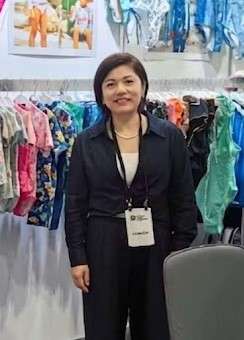
Lily Yu — General Manager, YucaiFJ (Fujian Yucai Industrial Development Co., Ltd.)
Production director at YucaiFJ — 15 years negotiating MOQs, pricing and production terms for swimwear brands in 40+ countries. The figures below are what actually works on the factory floor, not a buyer’s guide guess.
🔗 Lily Yu on LinkedIn · 📧 [email protected] · Factory & Certifications →
Quick Answer
You can cut a Chinese swimwear factory’s MOQ by 40–60% — not by asking “can you make it cheaper,” but by negotiating the supply-chain risk, not the number. The four levers that actually work: (1) share one sewing pattern across multiple SKUs so 3 prints count as one order; (2) accept stock white greige fabric + digital sublimation printing, which removes the fabric-dye MOQ almost entirely; (3) offer a higher unit price (8–12%) or a 50% deposit to cover the factory’s setup risk; and (4) time your order for the off-season (July–August or February–March in China), when a 150–200 piece run keeps a sewing line alive. First-order quotes from Chinese swimwear factories typically carry 10–20% of negotiable margin — but only if you speak their language.
Table of Contents
- The Factory Owner’s Insider Math: Why MOQ Is So Rigid
- Swimwear MOQ & Cost Driver Matrix (2026)
- The Tech Loophole: Digital Printing on Stock Greige
- Size & Pattern Consolidation Scripts (Copy-Paste Templates)
- Timing the Market: Off-Season Negotiation
- The Trim Pre-Buy Hack (Auxiliary MOQ Trap)
- The Hidden Quality Risks of Low MOQs
- FAQ
The Factory Owner’s Insider Math: Why MOQ Is So Rigid
Let me open our factory’s books, because that’s what the sourcing agents never show you. A swimwear order carries four fixed costs that must be spread across your pieces — and each one sets a floor under the MOQ:
| Fixed Cost | What It Actually Is | MOQ Floor It Sets |
|---|---|---|
| Fabric roll minimums | A roll of 190 GSM nylon/spandex weighs ~25 kg — enough for ~150 one-pieces. Fabric mills dye in whole rolls per color. | ~150–200 pcs per color on dyed fabric |
| Cutting markers & machine setup | Pattern maker lays markers, cutter wastes fabric on small runs; switching the sewing line stops production. | Stopping a 12-line workshop for 2 hours to set your elastic-tension variables costs real money |
| Flatlock seam skill | Swimwear needs 4-thread/6-needle flatlock and zig-zag elastic work — skilled operators charge more per hour. | Small runs amortize that premium per piece |
| Export admin | Customs, inspection and freight documents cost ~$150–300 per order regardless of size. | The smaller the order, the higher the per-piece admin |
“We don’t reject your 50-piece order because we are greedy. We reject it because stopping our workshop for two hours to set up your specific elastic tension literally costs us money.” — that’s the honest version. Once you see the math, every negotiation below is about removing one of these four floors, not arguing with the salesman.
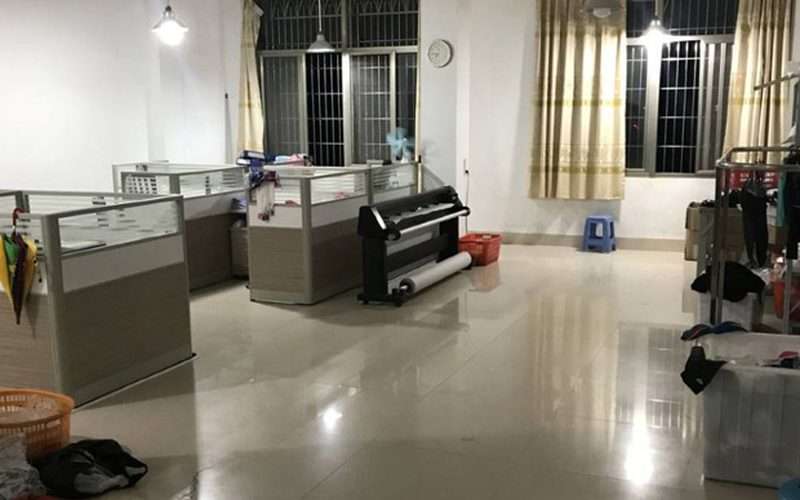
Swimwear MOQ & Cost Driver Matrix (2026)
Here’s the industry-standard MOQ vs. what a factory will actually negotiate to, broken down by what drives the cost:
| Customization Level | Standard MOQ | Negotiable Floor | Primary Cost Driver | Best Leverage |
|---|---|---|---|---|
| Solid-color basic bikini | 500 pcs/design | 150–200 pcs | Fabric dye vat minimums | Choose stock factory fabric colors |
| Custom all-over print | 1,000 pcs/print | 100 pcs | Screen-print plate & setup | Switch to digital sublimation (below) |
| Econyl / recycled nylon | 1,500 pcs/color | 300 pcs | Eco yarn dyeing constraints | Consolidate colors, or pay a fabric wastage fee |
| Custom metal trims / hardware | 3,000 sets | 200 sets | Zinc-alloy mold development | Use standard hardware; brand only your polybag & hang tag |
The pattern is the whole trick: every MOQ floor maps to a specific cost driver. Identify which one is blocking you, and you know exactly which lever to pull. If you want to plug your own quantities into a real factory costing model, our interactive swimwear MOQ & cost breakdown guide walks through the numbers for first orders at every scale.
The Tech Loophole: Digital Printing on Stock Greige
This is the single biggest lever most buyers never hear about — because it’s a textile-industry detail sourcing agents don’t know. Don’t ask for a custom Pantone dye. That triggers the fabric-mill MOQ (~500+ pcs). Instead ask:
“Do you keep stock white greige nylon/polyester in your warehouse? If we print by digital sublimation on that base, can we split one order into 5 different prints?”
And add one certification question to the same email — it matters for your compliance, and it signals you know what you’re doing: “Is the greige base and your digital sublimation ink OEKO-TEX Standard 100 certified?” Western retailers increasingly require it, and an honest factory will confirm or show the certificate number. (We run OEKO-TEX Standard 100, ISO 9001:2015, BSCI and WRAP across our swimwear line.)
Why it works:
- Digital sublimation has no plate fee — no screen-printing setup, no minimum print run per design
- The white greige base is already in stock, so the fabric roll minimum is already satisfied by the factory’s own inventory
- You can run 5 prints at 30 pcs each and still hit one consolidated fabric order — the “per-print MOQ” drops to near zero
- Print quality is photo-real, and for swimwear it’s the standard for colorful all-over designs
This is exactly how our custom swimwear program keeps first orders low: we hold white greige stock and print-to-order. Ask us for the current greige options and print costs.
Size & Pattern Consolidation Scripts (Copy-Paste Templates)
Factories love one thing above all: the same cutting marker, run longer. If your whole collection shares one sewing pattern (same triangle-bikini base, same construction lines, same marker) and only the print or strap color changes, it’s one cut to them — not three. Here’s a template proven to move MOQs (high reply rate in practice):
Email subject: OEM Swimwear Inquiry — 600-unit split order, one shared sewing pattern
Dear [Supplier],
We’re launching a swimwear collection in the US market and want to place a 600-piece first order. To fit your production efficiency, we’ve designed the whole range around one sewing pattern (classic triangle halter), sharing identical cutting markers:• SKU A — Tropical palm print: 200 pcs (S–XL)
• SKU B — Solid coral (your stock fabric): 200 pcs (S–XL)
• SKU C — Leopard print: 200 pcs (S–XL)
• Size ratio: fixed 1:2:2:1 (S/M/L/XL) per SKU to keep cutting-marker setups minimalSince the pattern, construction and cutting dies are 100% identical and only the surface print varies, will you accept this as a single consolidated order? We’re prepared to pay a 50% deposit up front to reduce your cash-flow risk.
We plan to finalize our supplier by this Friday.
Why this works: you’re not asking for a concession, you’re handing the factory an efficiency gain (one marker, one setup, three SKUs). Pair it with a 50% deposit and you’ve removed their two biggest fears — setup waste and cash-flow risk. For a more general set of MOQ levers, see our full MOQ explainer.
Timing the Market: Off-Season Negotiation
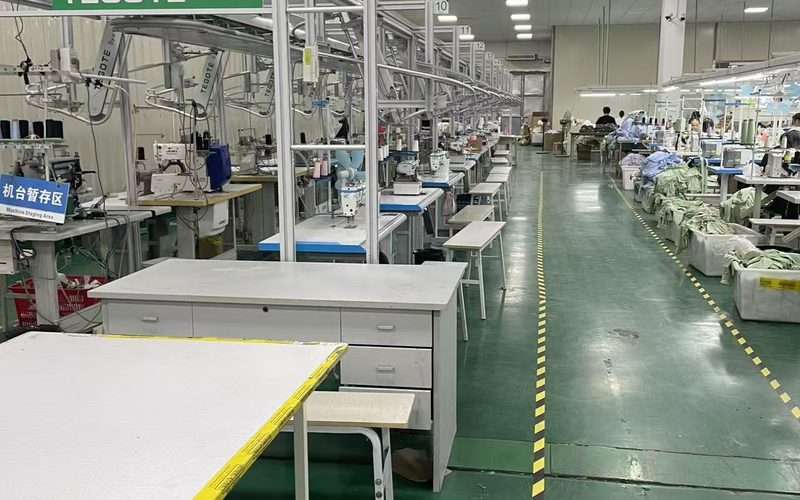
Swimwear is brutally seasonal — and that’s your negotiating weapon. If you ask for low MOQ in September–November (when factories are at capacity for holiday production and Q4 resort orders), you’ll get a flat no. But in the China off-season (July–August), or right after Chinese New Year (February–March), the factory needs to keep its skilled flatlock operators working — otherwise they quit and leave for other industries. A 150–200 piece fine-custom run that keeps the line alive is genuinely welcome.
Practical timing play: arrive in July–August with finished tech packs and fabric spec sheets in hand — the factory sees a serious, ready-to-run buyer exactly when it needs one. That’s when “we can’t go below 500” becomes “let’s see what we can do.”
The Trim Pre-Buy Hack (Auxiliary MOQ Trap)
Here’s a mistake that quietly triples your effective MOQ: your custom trims have their own MOQs. Swimwear ziplock polybags, silicone hygiene liners, rubber main labels and brand hang tags each start at 3,000–5,000 pieces. If you make the factory source those custom, your “50-piece test” just became a 3,000-piece trim order.
The pre-buy hack: buy the custom trims yourself first. Spend ~$200–300 on 5,000 branded ziplock bags and woven labels, and have them shipped to the factory’s warehouse. Then say:
“All my branded trims are already in your warehouse. My first order is just 150 pieces — you have zero sourcing risk and zero waiting time on materials.”
A factory that hears that instantly sees a professional, and the MOQ conversation changes. It’s the same logic as the quality-control checks we run — show you understand the real cost structure, and you get treated like the serious buyer you are.
The Hidden Quality Risks of Low MOQs
Here’s the warning nobody in the SERP gives you: a low MOQ is not automatically a good deal. When you push below ~200 pieces, some factories quietly move your order to a lower-tier line — less-skilled operators, or outsourced home workshops — and swimwear is the worst category for that to happen in:
- Flatlock seams need 100% stretch recovery; a bad operator produces seams that snap when the customer puts the suit on
- Based on our 15 years of factory line tracking, small-batch orders (<200 pcs) routed through temporary sewing teams show a 3–5% higher defect rate than the same style on a regular line
- For skin-tight, in-water wear, a seam failure or sheer panel = instant returns and a dead brand reputation
Protect yourself regardless of order size: put in writing that final payment releases only after a third-party pre-shipment insp
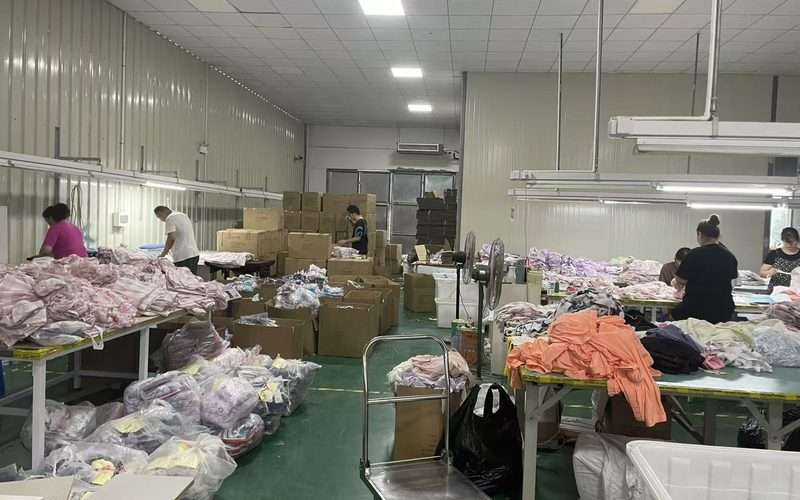
ection, and ask to see the AQL 2.5 sampling the factory actually uses. A real factory — like ours — runs the same QC on 150 pieces as on 15,000; you can see the inspection steps we run in our quality-control process overview.
FAQ
When should I negotiate MOQ with a swimwear factory?
After samples are approved, but before you place the PO. Once you’ve paid sampling fees and confirmed samples, you’re a real buyer to the factory — that’s your strongest position. Before sampling, just sound out their flexibility casually.
What if the factory absolutely won’t lower the MOQ?
Change what you’re negotiating. Offer a 50% deposit or even 100% prepay on a small first order to remove their trust barrier, or work with a trading company that consolidates containers. Alternatively, cut the cost drivers: stock fabric, standard hardware, fewer colorways.
Why do Alibaba swimwear factories advertise “2 pcs MOQ”?
Those are unlabeled stock items. The moment you want your brand label, a custom print or a fit adjustment, the real MOQ snaps back to 500+. Always ask what the custom MOQ is, not the stock one.
Is a 150–200 piece first order realistic for swimwear?
Yes — with a low-MOQ program or by using the levers above (shared pattern, stock greige + digital print, off-season timing). You’ll pay 15–25% more per piece than at 500+, but you test the market without dead stock.
How much should I expect to pay more for a lower MOQ?
A reasonable premium is 8–15% over the bulk unit price. If a factory drops the MOQ with zero price increase, ask which production line will run your order — that’s the scenario where quality suffers.
Do custom-printed swimsuits always have higher MOQs?
With screen printing, yes (plate fees). With digital sublimation on stock white greige, the per-print MOQ drops dramatically — that’s the loophole to use for low-quantity colorways.
What’s the best time of year to negotiate with Chinese factories?
July–August (China’s summer lull) or February–March (post-Chinese New Year). Avoid September–November, when factories are at capacity. For swimwear specifically, the July–August window also matches the end of the Western retail season.
What is a realistic minimum starting point for a direct-to-factory OEM swimwear order?
Industry-wide, specialized OEM programs like ours start at 50 pieces per colorway (ODM from 30), with stock greige + digital print options to keep first orders small. Below that, ordering samples is usually the smarter first step — validate the fit, then scale the MOQ from a position of proof.
Ready to Test Your First Swimwear Batch?
Tell us your style, fabric direction and how many colorways — we’ll reply with a trial-quantity price, MOQ options and a production timeline within 4 business hours, including the stock-greige and digital-print paths that keep your first order small.