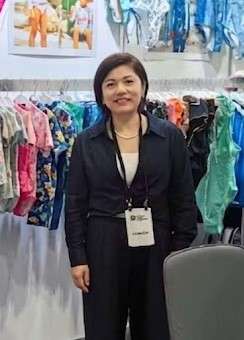
Lily Yu — General Manager, YucaiFJ (Fujian Yucai Industrial Development Co., Ltd.)
General Manager of YucaiFJ – 15 years helping e-commerce, DTC and boutique brands launch their own private label swimwear lines, from first sample to FBA-ready cartons. These are the private label rules I wish every founder knew before their first order.
🔗 Lily Yu on LinkedIn · 📧 [email protected] · Factory & Certifications →
Private label means a factory produces swimwear that you sell under your own brand name — your labels, your hang tags, your packaging, your story. You do not need a design team or a production line; you need a clear brief, a target customer and a factory that turns your mood board into a product. For a first branded run, expect a MOQ from 50 pieces per colorway, an 8–12 week timeline from brief to door, and a package that should cover logo labels, care labels, hang tags, polybags and cartons as separate line items. The model that beats private label for most e-commerce founders is white label — cheaper and faster but not exclusive — so decide which one fits your positioning before you ask for quotes.
- What Private Label Swimwear Actually Means
- What’s Included in a Private Label Package
- Private Label vs. OEM vs. ODM vs. White Label
- Why Private Label Wins for E-Commerce Brands
- The Private Label Startup Timeline
- What a Private Label Run Actually Costs
- Quality Control for E-Commerce
- Packaging and the Unboxing Experience
- Choosing the Right Styles for Your Market
- Amazon FBA and Marketplace Private Label
- Common Private Label Mistakes to Avoid
- Questions to Ask Before You Sign
- Frequently Asked Questions
What Private Label Swimwear Actually Means
Private label is the middle path between buying a finished product and building your own factory. The factory handles the pattern, the cutting, the sewing and the finishing; you own the brand — the name, the labels, the packaging, the customer relationship and the margin. That split is why private label has become the default for e-commerce swimwear brands: it gives you full control over how the product looks and is presented, without the fixed cost of owning a line.
The honest definition most factories gloss over: private label is not one thing, it is a spectrum. On one end it looks a lot like white label (pick an existing factory style, put your name on it); on the other it looks like OEM (your tech pack, your specs, the factory builds exactly what you draw). Where your project sits on that spectrum determines your MOQ, your timeline and your unit cost — so it is the first thing to nail down. I break the three models apart with a table in the next section, because mixing them up is the single most common source of a bad first order.
Underneath every private label decision sits a fabric decision, and it matters more than the logo. Most fashion swimwear runs on an 80% nylon / 20% spandex knit at 180–200 GSM — soft, vibrant and flattering — while performance or pool lines switch to chlorine-resistant polyester with a UPF 50+ finish. Lock the fabric spec at the same time you lock the brand, because it moves your MOQ and unit cost just as much as your packaging does. I break down fabrics in depth in our swimwear fabric guide.
What’s Included in a Private Label Package
When a brand asks me “what exactly do I get for private label?”, I send them this list. A complete private label package should include every touchpoint a customer sees and touches, not just the garment:
- Custom logo labels — heat transfer, woven or printed into the garment, in your brand’s colours.
- Custom care labels — washing and fibre instructions formatted to your brand’s style.
- Custom hang tags — brand story, materials, barcode and often a QR code to your size guide.
- Custom packaging — polybags with your logo, tissue paper, stickers and printed cartons.
- Custom neck tape — the inner woven tape at the neckline that makes a garment feel premium.
- Size labels — printed to your brand’s sizing chart, not a generic one.
Two items here cause the most misunderstandings, so confirm both in writing: whether these are included in the unit price or billed separately, and who owns the artwork files once approved. A factory that itemises these is a factory you can reorder from without surprises.
Private Label vs. OEM vs. ODM vs. White Label
These four terms overlap, and factories use them loosely. For an e-commerce founder the difference changes what you control — and what you pay. Here is the honest breakdown I give every client:
| Model | Who owns the design | Who develops the pattern | What you control | Typical MOQ |
|---|---|---|---|---|
| White label | Factory (existing style) | Factory | Brand name, label | Lowest (fast, not exclusive) |
| Private label | You (brief / mood board) | Factory, from your brief | Brand, colours, packaging, positioning | from 50 pcs / colorway |
| ODM | Factory’s styles, partly custom | Factory | Brand, some styling choices | 100–200 pcs |
| OEM | You (full tech pack) | Factory, from your tech pack | Design, specs, brand | Highest (fully custom) |
Private label is the right model when you have a brand idea and a target customer but not a full technical pack. The factory turns your mood board and reference images into a product under your name, and you keep the exclusivity that white label cannot offer. If two competitors carry the same white-label bikini, your brand story suffers — that is the exact problem private label exists to solve.
Why Private Label Wins for E-Commerce Brands
Private label swimwear from a China factory works especially well for e-commerce, and it is not just about the unit cost. The reasons are structural:
- Healthy margins. A competitive unit cost leaves room for advertising, returns and discounting — the three things that quietly eat e-commerce margin.
- Consistent sizing you can actually sell. Marketplaces and repeat DTC customers punish size inconsistency with returns. A factory experienced with e-commerce grades to your market’s fit, not a domestic one.
- Photogenic, repeatable samples. Your product photography is your storefront. The sample a buyer approves should be the same garment your customer receives.
- Reliable restocking. Once your pattern and grading are on file, a reorder should be a shorter, cheaper cycle — which is how a winning SKU compounds.
- DDP shipping as an option. A Delivered Duty Paid quote gives you one all-in landed price with no surprise customs fees at the door.
The pattern worth noticing: private label rewards brands that treat the first order as a system, not a one-off purchase. That is why the timeline and budget in the next two sections matter more than the unit price on your first quote.
The Private Label Startup Timeline
A realistic first private label run takes 8–12 weeks from brief to door on sea freight. Brands that compress this timeline usually pay for it with a rushed approval or a late packaging change. Here is the week-by-week shape:
- Week 1–2: brief, style selection and quotation.
- Week 2–4: sample development and approval (this is where most back-and-forth happens).
- Week 4–5: fabric, colour and packaging lock, plus deposit.
- Week 6–9: bulk production.
- Week 10: QC, packing and shipping.
- Week 11–12: transit plus a buffer for the port and customs.
The hidden delay almost everyone misses: packaging artwork. Start it in the same window as the sample, not after. Packaging is a separate approval round — artwork, dieline, print proof — and it is the most common reason a finished order sits in a warehouse waiting for a carton.
What a Private Label Run Actually Costs
Your quotation is not just “unit price × quantity”. To know what a low unit price really excludes, ask for these as separate line items:
| Cost line | What it covers | When it is paid |
|---|---|---|
| Sample & development | Pattern, grading and the pre-production sample | Up front, usually separate |
| Fabric & trim | The main cost driver of your unit price | Part of bulk |
| Branding | Labels, hang tags, polybags, printed cartons | Quoted separately or in unit |
| QC & inspection | In-line and pre-shipment inspection (e.g. AQL 2.5) | Confirmed up front |
| Freight & duties | The FOB / CIF / DDP difference | Per shipment |
Two honest notes from the factory floor. First, sample fees are usually separate and sometimes credited against bulk — always ask how the sampling cost is handled if you move to production, and get it in writing. Second, the pattern and grading are the fixed cost: they cost the same for 50 pieces as for 500, which is exactly why the unit price falls as your order grows. When you compare suppliers, compare the landed picture — unit price plus sampling, QC and shipping — not just the MOQ.
Quality Control for E-Commerce
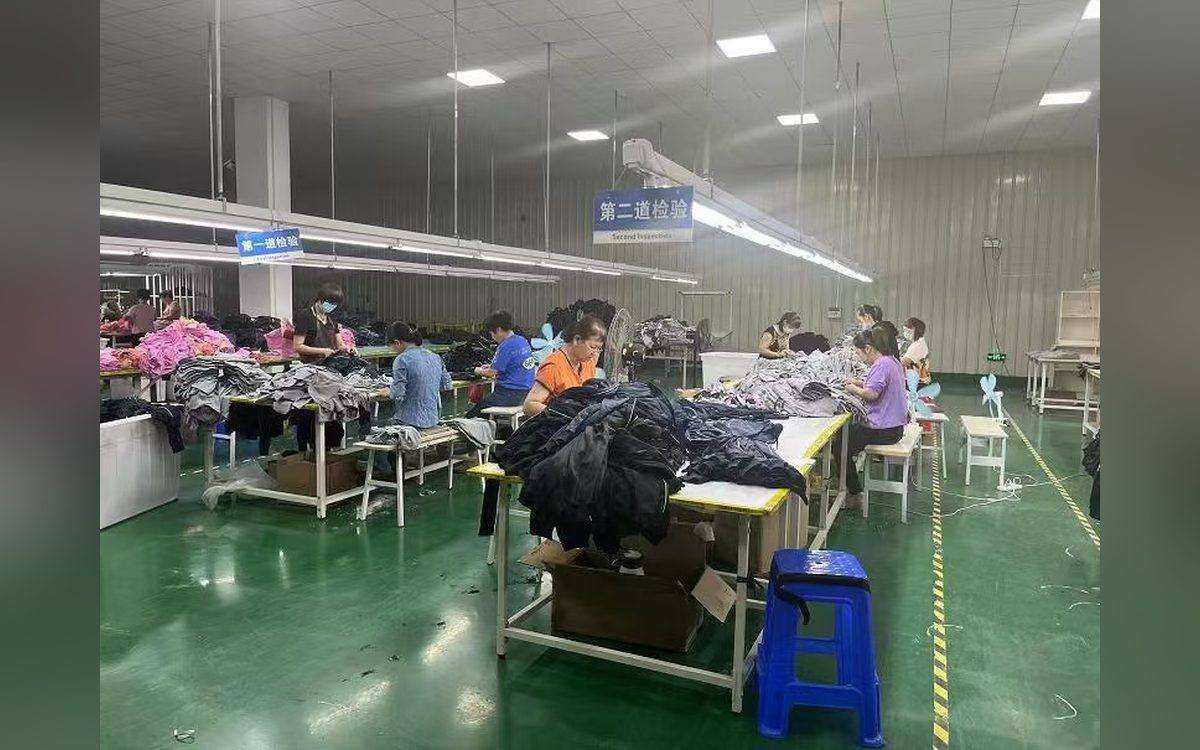
Online customers return swimwear for two reasons above all others: sizing and quality defects. Neither has to hurt you if the QC is set up before production starts. Mitigate both with four habits:
- Order a pre-production sample for photography and fit testing — and approve it in writing before bulk.
- Review the graded size set (XS through XL, or your full range) so the fit is consistent across sizes, not just on the sample size.
- Agree the inspection standard up front — commonly AQL 2.5 for final inspection — so you and the factory agree on what “passing” means before the cartons are taped.
- Request a pre-shipment inspection before sea freight, so a defect is caught in the factory, not in a customer review.
Two swimwear-specific checks deserve a place on every e-commerce QC list. The first is colour fastness — a suit that bleeds dye into the water on its first wash triggers an instant return, so ask for colour-fastness test results to ISO 105. The second is elongation & recovery — a suit that bags out after a few wears fails the fit your listing promised, so confirm stretch recovery to ISO 20932 (you want 92–95% recovery after 30 minutes at full tension). These two tests catch the quiet returns that sizing checks never see.
For marketplace sellers, this discipline is not optional — a high return rate pushes your listing down and your storage fees up. A factory that volunteers its QC standard and inspection process is a factory that has done this before.
Packaging and the Unboxing Experience
For e-commerce, packaging is not logistics — it is marketing. The unboxing moment is the first physical touch a customer has with your brand, and it is the difference between a one-time buyer and a repeat customer who films the opening. Work with your manufacturer on:
- Branded tissue paper and stickers — cheap, but they turn a polybag into an experience.
- A small care card with your brand story and a thank-you.
- A QR code linking to your size guide, care video or next collection.
- Eco-friendly packaging — a selling point for the sustainable customer, and increasingly a requirement on some marketplaces.
Lock the packaging artwork and the dieline in the same approval window as the sample. Packaging has its own print-proof round, and starting it late is the most common hidden delay in a first private label run.
Choosing the Right Styles for Your Market
A private label line fails more often from the wrong styles than from the wrong factory. Match your first styles to the customer you can actually reach: a boutique targeting resort customers might start with cover-ups and one-pieces, while a swim-team brand starts with training suits. Look at what your target buyer already searches for, and let the factory recommend which stocked or proven styles to develop first.
For a first private label run, two to four styles across one or two silhouettes is enough to test the market without tying up cash. Each extra style adds its own sampling, pattern and approval work, so scale the number of styles with your budget and your confidence in the fit. A small, coherent first line outperforms a large, scattered one — every time.
Amazon FBA and Marketplace Private Label
If you sell through Amazon FBA or another marketplace, tell the factory before production, not after. Marketplace fulfilment has specific physical requirements, and they are easiest to build in from the start:
- Individual barcode-labelled polybags, with the FNSKU or ASIN printed and scannable.
- Cartons marked for FBA routing, with the correct case-pack and weight markings.
- Consistent sizing so a customer’s size M arrives as the size M your listing promises.
Confirm the specific labelling rules with your account manager before the batch runs, so the shipment clears the fulfilment centre without a rework charge. This is a solved problem for an experienced private label factory — it only becomes a problem when it is an afterthought.
Common Private Label Mistakes to Avoid
These five mistakes cost private label brands more money than any unit-price difference. Avoiding them is cheaper than any negotiation:
- Ordering a run without a pre-production sample. The sample is the contract — approve it in writing.
- Choosing styles that don’t fit your market’s sizing. A size chart that works for one region fails in another. Grade to your buyer.
- Locking packaging after production starts. Packaging has its own approval round — start it with the sample.
- Assuming the factory’s size chart matches yours. Confirm the grading before you approve the size set.
- Ignoring the reorder MOQ. Once the pattern is on file, the reorder MOQ is usually lower — ask about it before you sell out.
Private label is the fastest way to a branded product, and it rewards the same discipline as any other launch: approve samples in writing, lock artwork early, and keep one approval owner on your side so nothing slips between approvals.
Questions to Ask Before You Sign
Written answers to these seven questions prevent most private label disputes later. Ask them before the deposit, not after:
- Is the style exclusive to my brand, or available to other buyers?
- Does the MOQ apply per colorway, and what is the reorder MOQ?
- Who owns the pattern and grading files after the order?
- Are labels, hang tags and cartons included in the unit price, or billed separately?
- What is the size chart, and can it be graded to my market?
- Which certifications (OEKO-TEX, REACH, GRS) come with the fabric, and can I verify them?
- How are sample and pattern fees credited if I move to bulk?
A factory that answers all seven clearly and in writing is signalling that it has run this process before. A factory that hesitates on exclusivity or file ownership is one to walk away from.
Frequently Asked Questions
What is private label swimwear?
Private label means a factory manufactures swimwear that you sell under your own brand name, including your own labels, hang tags, packaging and design direction. You own the brand and the customer; the factory owns the production line.
What is the MOQ for private label swimwear?
At YucaiFJ our private label MOQ starts from 50 pieces per colorway, with flexible options for a first order. Recycled or GRS fabrics generally start closer to 100 pieces per colorway because the mill buys recycled yarn in larger batches.
How is private label different from white label?
White label means selling a factory’s existing styles under your name with minimal change — fast and cheap, but not exclusive. Private label means development from your brief: your colours, your sizing, your packaging and your exclusivity. If two competitors carry the same white-label bikini, your brand story suffers.
What’s included in a private label package?
A complete package covers custom logo labels, care labels, hang tags, polybags, neck tape and size labels, plus printed cartons. Confirm in writing whether these are included in the unit price or billed as separate line items.
How long does a private label run take?
A realistic first run takes 8–12 weeks from brief to door on sea freight: 2 weeks to quote, 2–3 weeks to sample and approve, then 4–5 weeks of bulk production, QC and shipping, plus transit time. Packaging artwork runs in parallel with the sample — never after.
Can I start with a small private label run?
Yes. Our MOQ starts from 50 pieces per colorway, so a first branded run can stay small while you validate the market. Plan the packaging and labels with that same first run so the unit cost is not wasted on a single order.
Do you support Amazon FBA private label programs?
Yes. We produce to marketplace requirements — consistent sizing, individual barcode-labelled polybags and cartons marked for FBA routing. Confirm the specific ASIN and labelling rules with us before production so the batch clears fulfilment centres without a rework charge.
Do you keep my brand patterns and files?
Approved patterns and grades are kept on file so a reorder does not restart development. Confirm the data-ownership terms in writing; most brands prefer the factory to retain and reuse their approved files, which shortens reorder lead time.
Send Lily’s team your mood board, target price and quantity, and we will reply with a private label proposal — MOQ, timeline and a unit-price breakdown — within 4 business hours. We also post a free swimwear swatch book so you can feel the fabric before you commit.
Get My Private Label Quote →
New to swimwear sourcing? Read our guides on OEM vs. ODM, swimwear MOQ, private label packaging and the first-order checklist to plan the whole path.