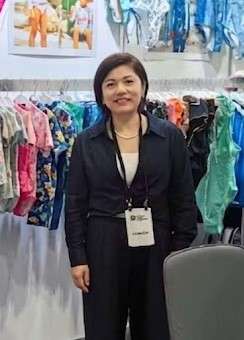
Lily Yu — General Manager, YucaiFJ (Fujian Yucai Industrial Development Co., Ltd.)
Production director at YucaiFJ — 15 years running swimwear production lines and helping brands pick between OEM, ODM and private label. These are the numbers and factory-floor rules I wish every buyer knew before their first email.
🔗 Lily Yu on LinkedIn · 📧 [email protected] · Factory & Certifications →
Quick Answer
OEM, ODM and private label are three ways to answer one question: who owns the design? OEM = you bring the tech pack and the factory builds it. ODM = the factory has the design and you brand it. Private label = a finished product from the catalogue with your label on it. The honest rule I tell every new brand is the opposite of what most articles say: at tiny volume, pure OEM is the most expensive and slowest route, not the cheapest — until you have a proven bestseller. So the smart ladder is private label or ODM to test the market, then upgrade your winners to OEM to lock down an exclusive design. Below I give you the real cost penalty matrix at 200 pieces, the two tricks we use to keep MOQ at 50, and the quality gate that protects you below 200.
Table of Contents
- The Three Ownership Models in 30 Seconds
- The Real Cost Penalty Matrix: Why Pure OEM at Tiny Volume Is Financial Suicide
- The Supply-Chain Loophole: How We Hit a 50-Piece MOQ
- The Lifeline: How AQL 2.5 QC Protects You Below 200 Pieces
- The Mixed Sourcing Roadmap for a New Swimwear Brand
- FAQ
The Three Ownership Models in 30 Seconds
All three terms describe one thing — who owns the design — and that single fact drives everything downstream: cost, MOQ, speed, uniqueness and your IP protection.
| Term | Who owns the design? | What you bring | What the factory does |
|---|---|---|---|
| OEM (Original Equipment Manufacturing) | You | Tech pack, sketches, fabric specs, grade rules | Builds exactly what you designed |
| ODM (Original Design Manufacturing) | Factory (you licence or rebrand it) | A style choice or a concept | Designs it, samples it, produces it |
| Private Label | Factory | Just sizes, labels and packaging | Ships a finished product from its catalogue |
Swimwear is not a generic garment, and that is where most explainer articles fall down. A bikini lives or dies on GSM (fabric weight, typically 180-230 g/m2 for a flattering, non-see-through drape), chlorine resistance (tested to ISO 105-E03 or AATCC 162 so the colour and shape hold after 200+ hours in chlorinated water), UPF 50+ (ASTM D6603 certified for sun-exposed resort wear), and stretch recovery (measured to AATCC / ISO 20932 to confirm a suit snaps back rather than bagging after a wear) — all held together by flatlock / four-needle-six-thread seaming, the stitch that stops a high-stretch bottom from snapping when wet. Then come the compliance layers your buyers and retailers will demand: OEKO-TEX Standard 100 and REACH for chemical safety, GRS for recycled content, and an AQL 2.5 inspection to prove the batch. In the comparison below, I keep coming back to these because they are the real reason OEM costs more at the start — and pays for itself later.
The Real Cost Penalty Matrix: Why Pure OEM at Tiny Volume Is Financial Suicide
I want to break a myth first, because the whole industry repeats it: the idea that OEM is cheaper per piece and therefore the obvious choice. That is only true at scale. Below roughly 300-500 pieces, pure OEM is the most expensive route you can take. Here is why, from the floor of the factory.
Insider detail — where the OEM money actually goes. When you bring a custom design, the factory does not just sew it. It has to: (a) build a paper pattern and grade it for your target market’s size ladder (EU 32-46 vs US 4-12 vs your own curve) — typically $150-$400 for the pattern room; (b) set up the machine for a high-stretch elastic line, which means re-tuning the flatlock seam tension so a 200-piece run doesn’t bag or break when wet — a real hourly cost in idle labour while operators re-string and calibrate; (c) open tooling for custom trims (branded metal hardware, custom wash care labels, a signature ziplock bag) — each has its own mould or plate fee; and (d) absorb the dye-vat minimum because a custom-dyed fabric needs a whole lot of a single colour before the mill will run it. All four are fixed costs you pay once, whether you order 200 or 2,000.
The result is a cost penalty matrix. Let’s run a classic two-piece bikini set at 200 pieces, three ways, with honest mid-range numbers (not the “from $2” fantasy you see on B2B platforms):
Note: All figures assume a standard 2-piece bikini (top + bottom), 200 GSM nylon/spandex fabric, FOB Xiamen / Shenzhen port, quoted in USD (based on 2026 Q1 raw-material and labour-cost baselines; subject to seasonal yarn-market fluctuations). A more complex style — multi-strap, reversible, underwire, or with built-in shaping — raises the OEM pattern, sampling and trim costs further, which makes the OEM vs ODM gap below even wider.
Tip: on mobile, swipe left / right on the table to view the full cost breakdown across the three columns.
| Cost item (200 pcs) | OEM (full custom) | ODM (style-library tweak) | Private Label (stock) |
|---|---|---|---|
| Pattern / grading fee | $300 (pattern + grade + 2 revisions) | $50 (fit tweak) | $0 (re-use existing block) |
| Small-batch re-tooling / set-up | $200 (flatlock tension re-set-up) | $0 | $0 (existing line) |
| Bulk unit price (FOB) | $12.50 | $8.50 | $9.20 |
| Trims / packaging tooling | $150 (custom metal + label) | $0 | $0 (neutral packaging) |
| Total first order (200 pcs) | $3,150 | $1,750 | $1,840 |
| Lead time | 9-10 weeks | 6 weeks | 2-4 weeks (fastest 2) |
Unsure if custom OEM fits your budget for 200 pieces? Download our free Google Sheet / Excel template — plug in your tech pack, dye-vat minimums and trim costs to see your exact break-even point in seconds.
Download Free Estimator (Google Sheet / Excel, No Credit Card) →
See the difference? OEM is $3,150 — double the ODM route — because on top of the 200 units ($2,500) you carry $300 of pattern work, $200 of machine re-set-up and $150 of trim tooling. Private label, at $1,840, costs a little more per unit ($9.20 vs $8.50) but has zero set-up costs and ships in 2-4 weeks. ODM lands in the middle at $1,750. So for a first test of 200 pieces, ODM or private label is materially cheaper and much faster — which is exactly why I tell new brands to start there.
The flip side is real, though: the moment you have a proven seller and climb to 800-1,000+ units, the fixed costs amortise away and OEM’s per-unit price falls below the other two. That is when OEM stops being expensive and starts being your defensive moat. Keep that trade-off in view: pay a premium to own the design now, earn it back at scale.
Check the standards behind the claims. When a factory cites OEKO-TEX, REACH or GRS, ask for the certificate number, not just the buzzword. A real OEKO-TEX Standard 100 certificate is verifiable on the official OEKO-TEX Label Check portal using its 8-digit number; recycled-content claims should be backed by a Global Recycled Standard (GRS) Transaction Certificate for the specific batch, and a social-audit report (BSCI/SMETA) is searchable via amfori BSCI’s member search. Any serious factory hands these numbers over without hesitation.
The Supply-Chain Loophole: How We Hit a 50-Piece MOQ
So far I have argued OEM is expensive at small volume — so how does anyone start small and still grow into it? The answer is to attack the four minimums that actually stack, not the one the salesperson quotes. When a competitor says “MOQ 50,” they almost never mean 50 of anything. The real minimum is the largest of your fabric, print, trim and label minimums. In conventional production those are high: a custom-dyed fabric needs a dye-vat minimum of roughly 150-200 pieces per colour (single solid colour, about 25 kg), and a screen-printed panel needs a plate + a run big enough to justify it. That is the honest reason the industry norm is 300-500 pieces, and why some big mills refuse orders under 3,000.
We break that with two techniques. This is the part no catalogue will print, and it is what lets a brand test 50 pieces without lying to you about the cost:
| Loophole | What it does | How it kills the minimum |
|---|---|---|
| 1. Digital sublimation on stock greige | We keep white greige fabric (undyed nylon / polyester) already in stock, then digital print your design onto it by sublimation | No dye vat, no screen plate. Because the white base already exists, you satisfy the roll minimum and can run a single print from ~30 pieces — nearly any colour, in small qty |
| 2. Trim pre-buy | You buy your custom trims once, up-front, and we store them on our shelf | Custom labels / metal bits carry a 3,000+ piece individual minimum. Buy them once for about $200-$300, warehouse them with us, and they never block a 50-piece run again |
The first-person part. In our YucaiFJ cutting room we keep over 5,000 metres of 190-220 GSM white greige nylon and polyester on standard rolls at all times. So when a new brand comes to me with three custom prints, I don’t call a dye house and wait three weeks for a colour to be approved — we load the white fabric straight onto our digital sublimation printers and proof the prints in a matter of days. That is the single biggest reason we can hold a 50-piece custom door open when bigger mills simply will not.
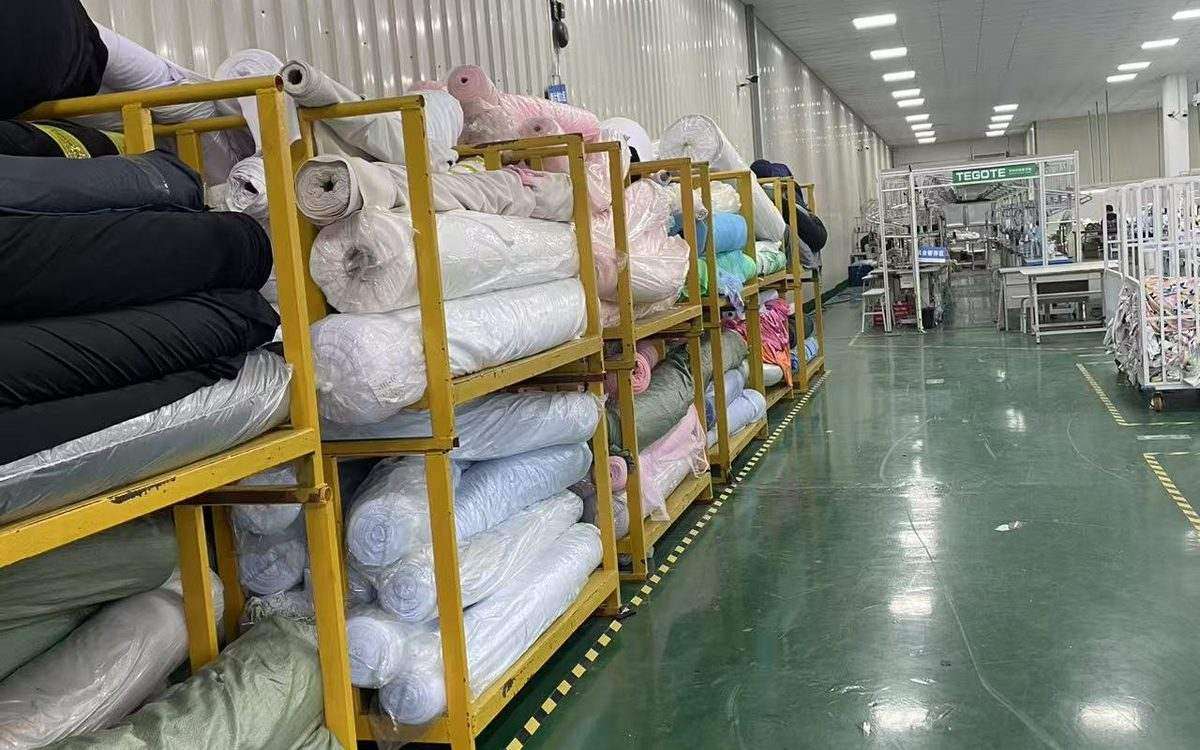
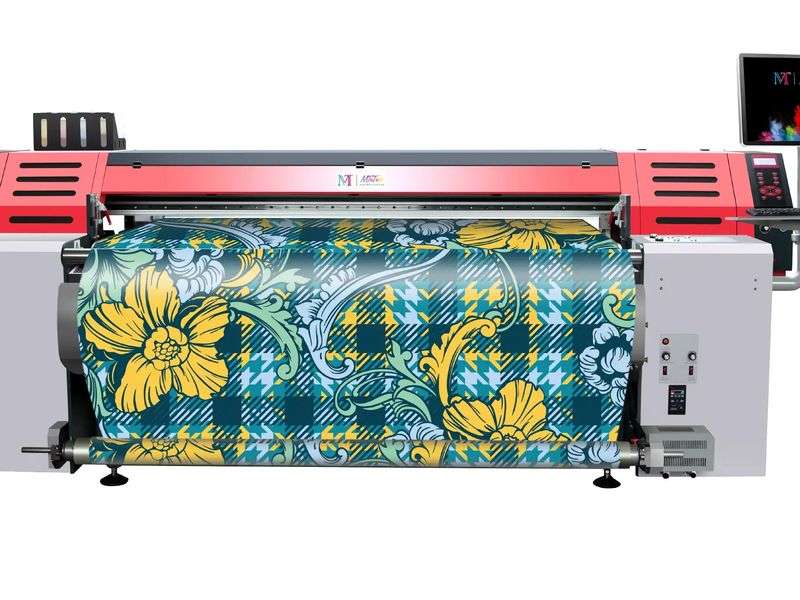
Why this matters for your decision. A factory that can tell you how it gets to 50 pieces is a factory that actually understands its own cost structure — and that transparency is worth more than any “low MOQ” claim. If a supplier quotes 50 pieces but cannot explain how the fabric and print minimums are covered, you are either being quoted a price the factory cannot sustain, or you are about to get pooled into someone else’s run and lose control of timing and colour. Ask for the four minimums, and ask how each is handled below their “headline” MOQ.
The Lifeline: How AQL 2.5 QC Protects You Below 200 Pieces
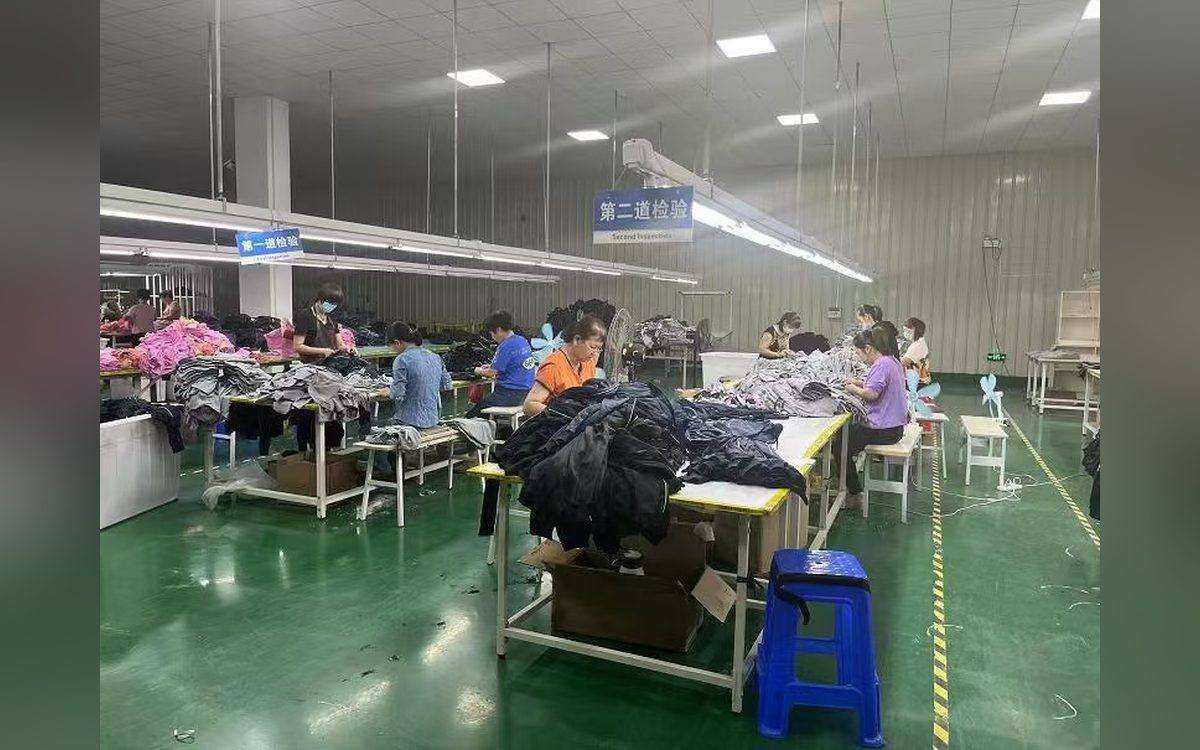
The other reason small OEM orders feel risky is where they actually get made. Orders of a few hundred pieces are exactly the kind a weak supplier might route to a low-tier line — or, worse, outsource to a home workshop that sews a flatlock stitch that looks fine dry and snaps the first time it is wet. That is how a small order quietly produces a 3-5% defect rate and a batch of returns that do more damage to a young brand than the money saved.
There are three controls you should insist on, in writing, before you place any small-order swimwear:
- Ask for the three-line QC by name: IQC, IPQC, FQC. IQC checks the incoming fabric for GSM, colour fastness and stretch recovery before cutting. IPQC inspects during sewing — especially the flatlock seam, which on a high-stretch suit must be set to a tension that allows the fabric to recover without puckering or snapping. FQC is the finished-goods audit. A factory that can point to three named stages is not improvising. Before you sign anything, review the standard swimwear manufacturing process and QC manual to confirm IQC really tests incoming fabric GSM and stretch recovery before a single pattern is cut.
- Sign off on a lab dip and a PP sample. Get the pre-production sample made in the real production fabric with the real print, then approve it before bulk cutting. This is the single biggest lever against the number-one complaint in this trade — “the bulk does not match the sample.”
- Release final payment on a third-party AQL 2.5 inspection. Put it in the contract: the last instalment is only paid after an independent pre-shipment inspection shows the minor-defect tolerance is within AQL 2.5. That number is the difference between “acceptable” and “let anything through.” Combined with a 24-hour tension-recovery stress test — where sample seams are stretched to 180% of normal width and then measured after 24 hours for permanent deformation, so a seam that would bag or split under real wear is caught before it is packed — it protects you from the two failures that ruin a swimwear brand: faded colour and a seam that lets go.
The uncomfortable truth I tell buyers directly: below 50 pieces, no factory can do all of this properly and stay affordable. Our own honest floor for a fully custom, QC-protected OEM order is around 50 pieces — and that is only possible because of the greige-print and trim pre-buy tricks above. If someone promises you a 20-piece OEM run with full lab-dip, PP sample and third-party AQL inspection, be suspicious. You are either about to overpay, or you are about to get a lower standard of quality than the promise.
The Mixed Sourcing Roadmap for a New Swimwear Brand
Forget “pick one label forever.” The brands that win treat the route as a ladder you climb inside a single factory, so your fabric specs, grade rules, fit blocks and QC benchmarks carry over and you never re-vet a supplier. Here is the three-phase map I walk every new client through:
| Phase | What you order | Purpose | Cost profile |
|---|---|---|---|
| 1. Private label / ODM test (months 0-6) | 10-50 pcs per style, proven styles | Find the niche, learn your size curve and colour mix with minimal capital | Lowest set-up, highest per piece, ships fastest |
| 2. Bestseller migration to OEM (months 6-12) | Upgrade the top ~20% of styles to full custom | Own the cut, cup structure, thigh contour and fabric — your exclusive IP | Moves from “test” to “branded,” unit price drops as volume climbs |
| 3. Custom-dominated line (growth) | OEM hero styles as the core, ODM only for new tests | Build a defensible, differentiated collection | Per-unit lowest at scale, setup spread across the range |
Phase 3 is also where the sustainability story comes in. If your buyers are European or upmarket retail, introduce GRS-certified ECONYL® regenerated nylon (a recycled nylon that performs like virgin) and OEKO-TEX Standard 100 / REACH compliance into the mix. In this phase OEM earns its keep: you are no longer buying stock pieces, you are buying a patterned, certified, exclusive product that competitors cannot simply reorder from another factory.
Lily’s protocol tip for Phase 2: when you move an ODM winner into full OEM, insist that the factory transfers the digitised DXF / RUL pattern files to you on final payment. Owning the exact grade rules for your cup shape and leg-cut contour is what stops you being locked into one vendor as you scale — and it is the part most brands forget to put in writing.
Warning from Lily’s 15 years on the floor: simply buying “recycled fabric” is not enough for EU/US customs. Make sure your OEM supplier issues a Global Recycled Standard (GRS) Transaction Certificate for your specific batch — not just a generic supplier certificate. Without it, a shipment can be flagged for greenwashing during import clearance, and that delay plus penalty is far more expensive than the fabric you saved on.
FAQ
What is the main difference between OEM and ODM swimwear?
The difference is design ownership and tooling:
- OEM — you own the IP, tech pack and custom patterns. The factory only manufactures.
- ODM — the factory owns the standard designs; you pick styles from their catalogue and brand them.
OEM gives you a unique product; ODM gets you to market faster with proven styles.
Why do swimwear factories set such high MOQs for OEM orders?
Because OEM means custom-dyed fabric and custom patterns. A dye lot needs about 150-200 pieces per colour, and the pattern room plus elastic-tension machine set-up add idle-labour cost that must be amortized across the run.
How can startup swimwear brands bypass fabric dyeing MOQ limits?
Print on stock greige. We keep white undyed nylon/polyester in stock, so you skip the dye vat and its 150-200 piece minimum. Digital sublimation then lets us run a single print from about 30 pieces — no screen-plate fee.
What is the trim pre-buy hack for low-MOQ swimwear production?
Custom trims (branded ziplock bags, metal hardware) have their own 3,000+ piece minimums. Buy them once for about $200-$300, warehouse them with the factory, and they no longer block a 50-piece run.
What are the quality risks of buying swimwear below 50 pieces?
Very small orders often get routed to low-tier or outsourced workshops. Swimwear needs skilled flatlock operators; poor execution snaps under tension and causes high returns — which is worse than saving money.
How can I protect my brand from quality defects on low MOQ orders?
Put it in writing: final payment releases only after a third-party AQL 2.5 inspection. Also insist on the same 24-hour stretch-recovery test on a small order as on a big one — a certified factory runs identical QC regardless of volume.
What fabric should I choose for premium or luxury swimwear collections?
For luxury eco lines, spec GRS-certified ECONYL® regenerated nylon (190-230 GSM) for a premium hand-feel. For athletic or training suits, choose chlorine-resistant PBT so colour and shape survive chlorinated pools.
How does manufacturing seasonality impact my swimwear OEM negotiation?
Peak season (September-November) fills capacity and pushes out small orders. Negotiate in the off-season (July-August or right after CNY in February) to get lower MOQs, because factories need work to keep their skilled flatlock operators.
Ready to Test Your Market Without Burning Capital?
Whichever label you start on, the factory matters far more than the model name. The honest route — test with private label or ODM, then lock down your winners in OEM — only works if one factory can carry you up the ladder without you re-vetting a supplier. At YucaiFJ we do exactly that: an in-house design team, the greige-print and trim pre-buy tricks that hold a genuine 50-piece custom MOQ, and the IQC/IPQC/FQC plus AQL 2.5 gate on every order. Start wherever you are — no commitment needed to begin.
Option A — High-intent (send us your design):
Submit Your Tech Pack for an Itemized Cost Breakdown →
We reply within 4 business hours, with an itemized cost breakdown, MOQ options, our certifications, and a scheduled live video factory tour.
Option B — Low-commitment (just looking): request our free fabric & trim swatch book and get real 200-230 GSM ECONYL and recycled-nylon samples shipped to your studio, so you can feel the stretch and finish before you spend a cent.