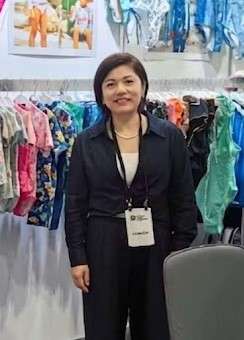
Lily Yu — General Manager, YucaiFJ (Fujian Yucai Industrial Development Co., Ltd.)
Production director at YucaiFJ — 15 years vetting factories, running production lines and watching first-time brands pick the wrong supplier. This guide is the honest checklist I wish every buyer had before emailing a Chinese factory.
🔗 Lily Yu on LinkedIn · 📧 [email protected] · Factory & Certifications →
Quick Answer
Choosing a reliable swimwear manufacturer in China comes down to four verifiable signals — not brochures, not claims: (1) 5+ years of swimwear-only experience (not “garments” — the elastic-seam math is different); (2) a real workshop with Flatlock machines (Yamato/Pegasus 4-thread/6-needle), plus bonding and laser-cut capability for technical styles; (3) direct fabric control, ideally including recycled ECONYL® and OEKO-TEX Standard 100 certified options; and (4) a flexible MOQ that starts at 50–100 pieces per colorway so you can test before you scale. Ask those four things on your first call — a factory answers instantly, a trading company starts to sweat.
Table of Contents
- Factory Director’s Insider: The 2 Biggest Traps That Ruin Swimwear Startups
- Swimwear-Specific Manufacturer Comparison: Match Your Niche
- The 3-Question Middleman Filter (Copy-Paste Templates)
- The Machine-Level Video Audit Checklist
- The DIY “Abuse Test”: How to Evaluate Samples at Home
- Transparent Costing & MOQ Tiers
- The Bitter Truth About “Zero MOQ” Factories
- FAQ
Factory Director’s Insider: The 2 Biggest Traps That Ruin Swimwear Startups
Let me open our factory’s door and show you the two traps I’ve watched kill more young brands than anything else — both invisible until it’s too late.
Trap 1 — The fabric-mill MOQ mismatch. A trading company happily quotes you “50-piece custom MOQ.” Then production stalls for 2–4 weeks, sometimes months. Why? Because the fabric mill — not the sewing factory — has its own minimums: dye lots and digital-print runs often start at 1,000+ meters. The middleman is waiting to pool orders to fill that roll, and your timeline is hostage. Ask upfront: “For my 50-piece order, whose fabric are we using — your stock, or a custom mill run?” A re
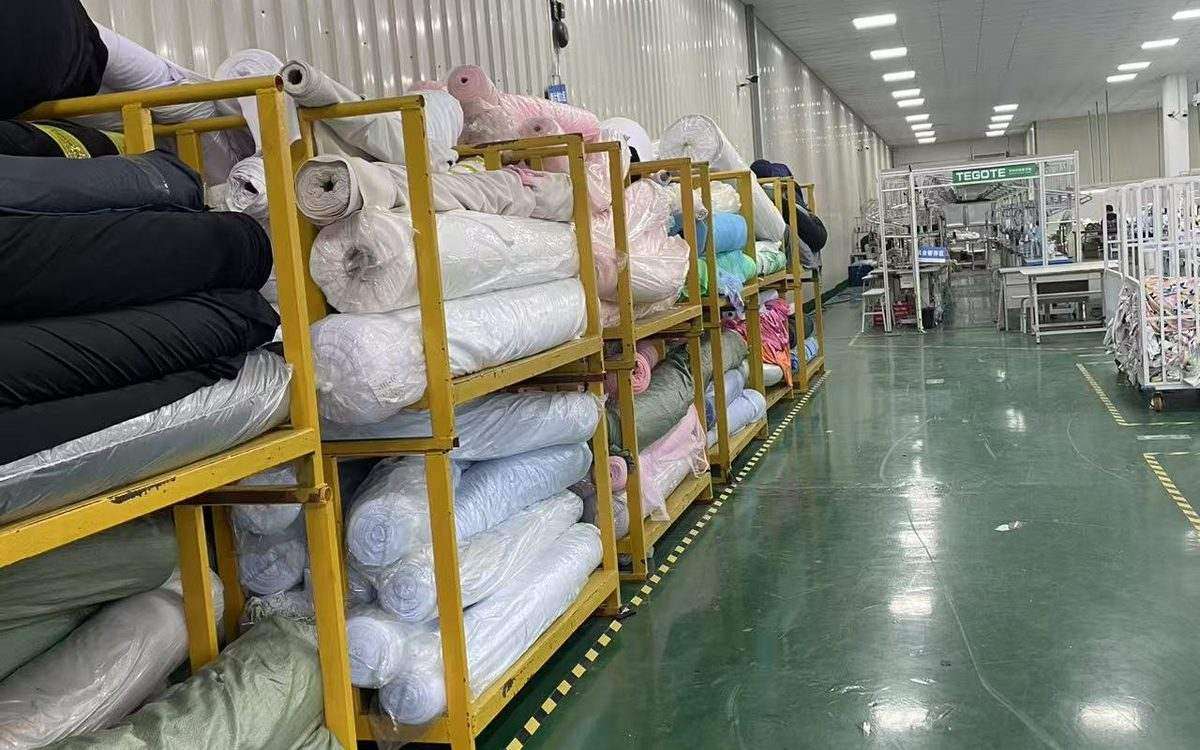
al factory with stock fabric hangers answers instantly.
Trap 2 — The peak-season squeeze. Global swimwear production peaks hard in January–May. When capacity fills, uncommitted small orders get quietly pushed back — or dropped — for big clients. If your supplier can’t show you a production schedule and a written commitment, your launch window is at risk. A proper factory signs NDA + a scheduling agreement and gives you a real timeline.
Factory warning: the label “MOQ 50 pcs” on Alibaba means almost nothing until you confirm the custom MOQ for your fabric, your print, your trims and your label. Those are four separate minimums that stack.
Swimwear-Specific Manufacturer Comparison: Match Your Niche
Not every swimwear factory fits every brand. Match your product type to the right capability:
| Swimwear Type | Key Fabrics | Key Machinery & Stitching | Factory Fit |
|---|---|---|---|
| Fashion / bikini | High-stretch poly/nylon-spandex, printed & jacquard | Overlock, zig-zag, removable-cup stitching, reversible construction | Flexible low-MOQ swimwear maker |
| Athletic / training | Chlorine-resistant poly, Xtra Life Lycra®, high-recovery compression | Flatlock (4-thread/6-needle), laser-cut, bonded seams | Precision equipment manufacturer |
| Shaping / plus-size | High-GSM shaping fabrics, OEKO-TEX / REACH certified | Built-in shapewear mesh, underwire channeling, multi-needle reinforcement | Factory with strong pattern development |
If your line mixes fashion prints and a performance style or two, look for a factory that runs both a print line and flatlock stations — like ours. A factory locked into one niche will over-quote or under-deliver the other. In my 15 years overseeing production, I’ve watched fashion-focused factories ruin high-compression athletic orders simply because their tension settings were calibrated for standard poly-spandex — a 3% elastane difference changes the whole sewing math.
The 3-Question Middleman Filter (Copy-Paste Templates)
Many “factories” on B2B platforms are trading companies in disguise. Send these three technical questions on your first contact — a genuine factory answers immediately, a middleman stalls:
Q1 — Pattern room: “Can we have a live video call with your in-house pattern makers while they adjust a swimwear tech pack?”
Why it works: middlemen have no pattern team; they outsource everything and won’t risk a live session. Pro-tip: if they reply “our master pattern maker is out of the office today, but we can send a photo later,” that is a 90% indicator of an outsourced pattern operation.
Q2 — Fabric dyeing minimums: “If I choose ECONYL or another recycled fabric, what is your minimum dyeing/printing quantity in meters per colorway?”
Why it works: a factory that buys directly from mills quotes exact stock colors and roll minimums instantly; a middleman answers vaguely.
Q3 — Machine specifics: “Which brands of Flatlock machines do you run (e.g., Yamato or Pegasus), and what is your standard stitch density for seamless linings?”
Why it works: nobody who doesn’t own a sewing floor knows their machine brands and stitches-per-inch.
The Machine-Level Video Audit Checklist
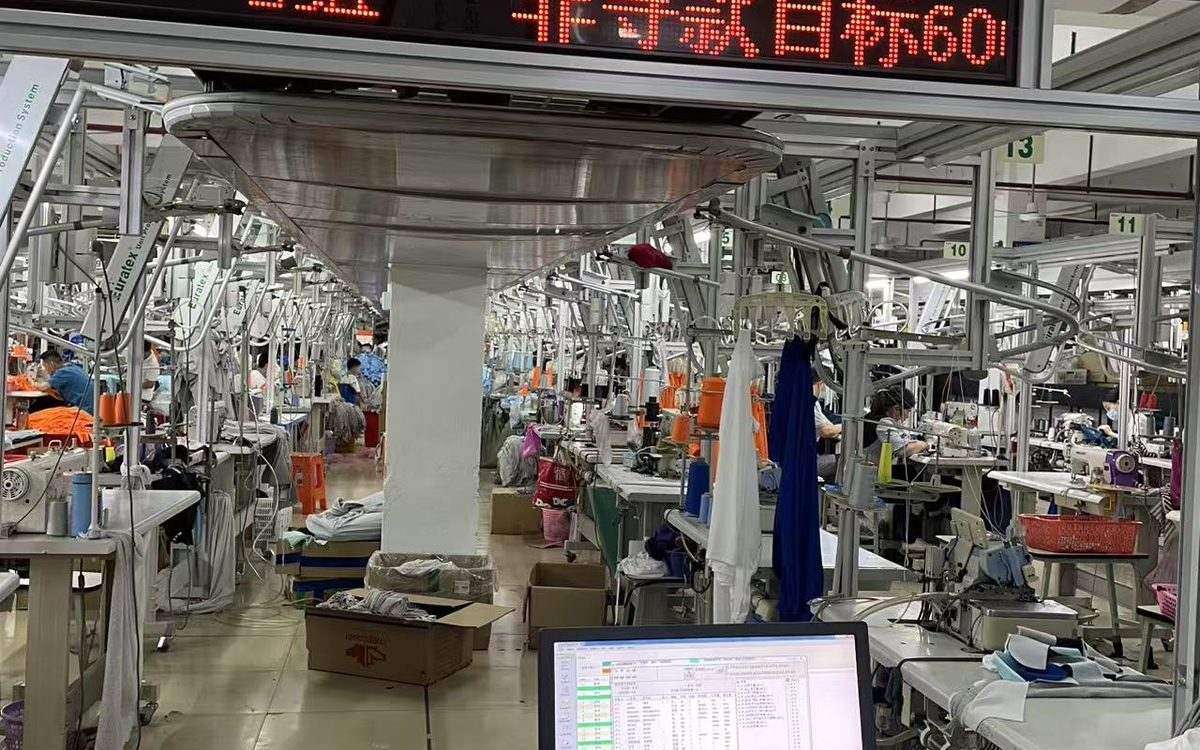
When you do a video factory tour (Zoom/WhatsApp) or hire someone on the ground, don’t let them show you the pretty sample room. Ask for the sewing floor and verify these four machines:
- Flatlock machines (Yamato/Pegasus 4-thread/6-needle) — the seam quality that prevents chafing and snapping in high-stretch zones
- Laser cutters — clean, no-fray edges for premium and seamless styles
- Bonding / heat-seam machines — required for technical and seamless bonded swimwear
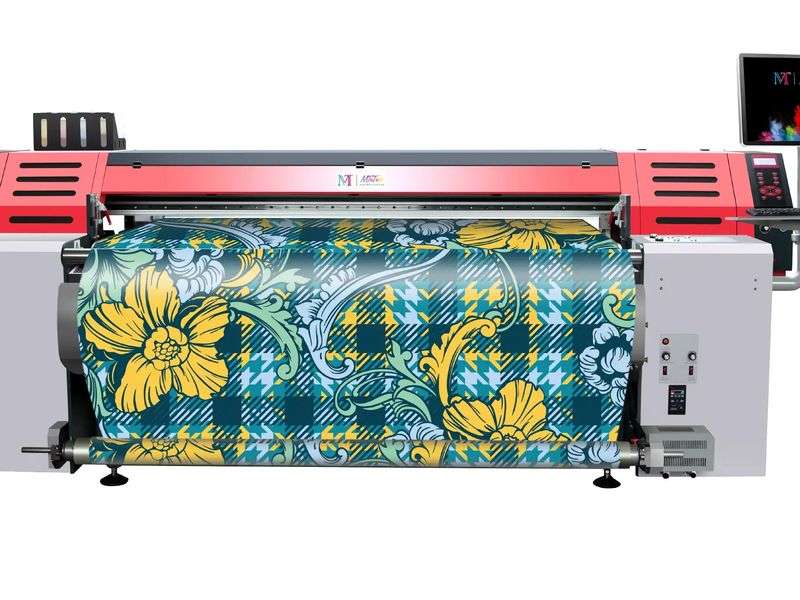
- Digital sublimation printers — for color-accurate all-over prints with no screen-plate minimums
When running this video audit, demand to see all four machines actively running on the main floor, not standing idle in a showroom. (Tip: a transparent facility will gladly route the camera to its AQL 2.5 quality-control station during live production — that’s the proof that decides.)
The DIY “Abuse Test”: How to Evaluate Samples at Home
Your sample arrives. Before you’re impressed, run these three no-laboratory tests — they reveal how the factory really sews:
| Test | How | Pass / Fail |
|---|---|---|
| Stretch & recovery | Stretch the fabric to ~200% (twice its length), hold 10 seconds, release | Snaps back within a second or two = good elastane recovery; stays stretched = defect |
| Seam strength | Pull the lining and flatlock seams apart firmly, both wet and dry | No gaping, no loose threads, seams hold tension = pass |
| Opacity (sheer test) | Hold the suit against light, then dampen the lining area | No see-through on the pant/bust panels — a lining or higher-GSM fabric is doing its job |
These are the same checks our sample room runs before any style ships — a factory that passes them on your sample will pass them on bulk. If the opacity test fails, here’s what it usually means: the factory swapped your specified lining for a cheap ~130 GSM single-knit poly instead of the 170+ GSM stretch nylon it quoted — a classic cost cut that shows up as a see-through panel on a customer.
Transparent Costing & MOQ Tiers
Here’s what a mid-range custom bikini actually costs to make — the honest breakdown most suppliers never show:
| Cost Block | Share of Unit Price | What It Covers |
|---|---|---|
| Fabric (main + lining) | 40–60% | Body fabric, functional lining, elastics |
| Cutting & sewing labor | 20–30% | Pattern, cutting, stitching, finishing |
| Trims, tags & packaging | 5–10% | Woven labels, hang tags, ziplock bags |
| Sampling / development | $50–$150 per style | Usually refundable against your bulk order |
Note: base FOB cost excludes duty and shipping, which usually add another 15–25% to your landed unit cost depending on your destination country — budget for it before comparing quotes. And the $50–$150 sampling fee assumes a reasonably complete tech pack; a vague one costs extra rounds and extra fees — it’s usually refundable against your bulk order once you hit the first tier (e.g., 200+ pcs), so confirm the threshold in writing.
And the MOQ tiers — why bigger orders cost less per piece:
| Order Scale | MOQ | Production Features | Unit Price |
|---|---|---|---|
| Test drop | 50–100 pcs/style | Stock fabric, digital print, higher per-piece cutting cost | 100% (baseline) |
| Scaling brand | 200–300 pcs/style | Small custom color runs, batch sewing, less waste | −15% to −25% |
| Bulk run | 500+ pcs/style | Dedicated fabric, automated cutting, max efficiency | −20% to −40% |
Want to model your own numbers? Use our MOQ & cost explainer as a reference, or send us your styles for a trial-quantity quote.
The Bitter Truth About “Zero MOQ” Factories
Here’s the warning nobody in the SERP gives you: a “1-piece MOQ” or “zero MOQ” offer is rarely a good deal — it usually hides one of three traps:
- Quality control is cosmetic. Sub-minimum orders get routed to small workshops with no staged AQL inspections — the sample is perfect, the bulk is not.
- Trims are silently downgraded. Zippers, hooks, linings and pads below purchase thresholds get swapped for the cheapest generic parts, and you find out on a customer.
- You’re first to be bumped. When a big order lands, your tiny one is delayed or cancelled — right before your launch.
Protect yourself regardless of order size: require a written AQL 2.5 inspection before final payment, and confirm which production line runs your order.
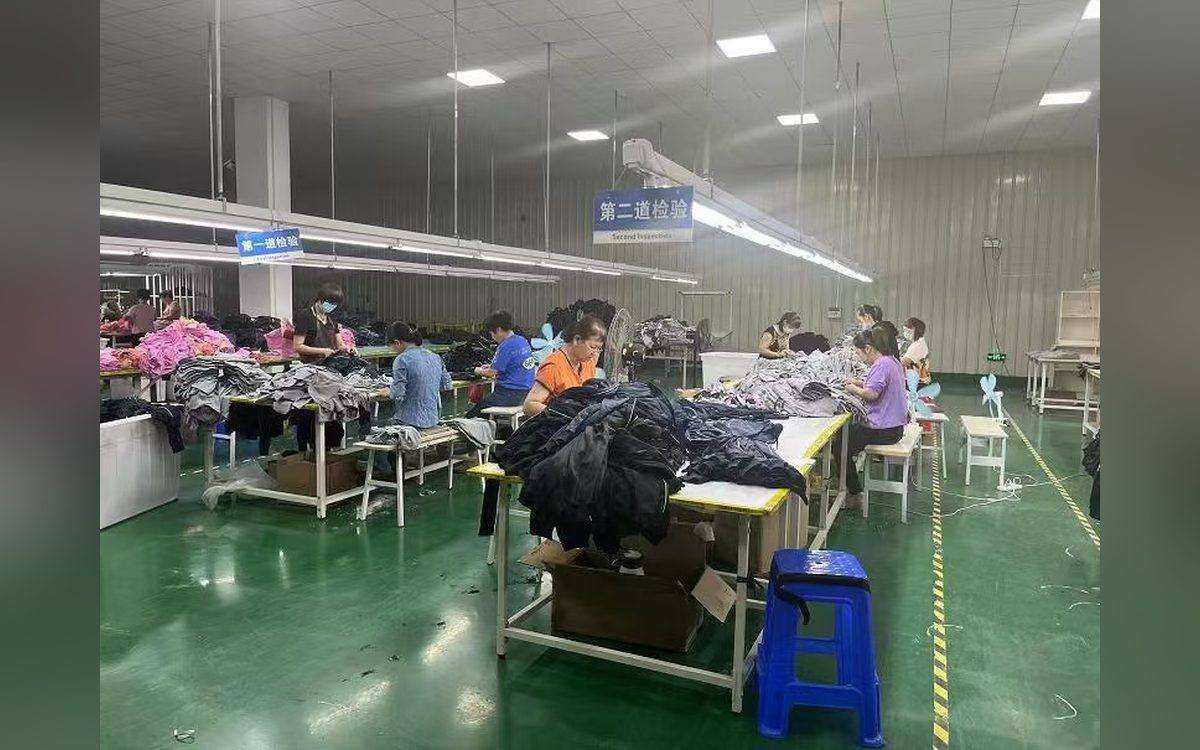
A serious factory runs the same QC on 150 pieces as on 15,000 — ensure this is written into your purchase contract regardless of volume.
FAQ
How do I protect my original designs before sending them to a Chinese factory?
Have the factory sign a bilingual NDA before you share any tech pack or sketches. Credible factories — including YucaiFJ — sign NDA and non-circumvention agreements routinely.
What is the standard lead time for sampling and bulk production?
Sampling typically takes 7–10 days (we finish 1–2 rounds); bulk production runs 30–45 days outside peak season, extending toward 60+ days during the January–May rush. Always confirm the schedule in writing.
Should I work with a trading company or a direct factory?
For custom development, consistent quality and long-term scale, a direct factory gives you control of fabric, pattern, QC and lead time. A trading company works for one-off spot buys but adds a layer between you and production.
What incoterm should a startup use when shipping from China?
FOB is the most common for startups — the factory handles China-side export and port delivery. EXW works if you have your own forwarder. DDP is easiest for small first orders but costs more per piece — and while DDP simplifies logistics, ensure your supplier explicitly confirms whether local import duties and taxes are included in the quote, as unexpected customs clearance fees can wipe out a startup’s entire profit margin.
How do I arrange third-party inspection?
After production, an independent inspector (SGS, Bureau Veritas, etc.) checks the goods against your approved sample using an AQL sampling plan. The factory hosts the inspection; you pay for the service.
Can I get a low MOQ on my first order?
Yes — with a low-MOQ program, OEM can start at 50 pieces per colorway and ODM at 30. You’ll pay 15–25% more per piece than at 500+, but you test the market without dead stock.
How do I verify a factory’s certifications are real?
Ask for PDF certificates with registration numbers (ISO 9001, OEKO-TEX Standard 100, BSCI, WRAP) and cross-check them online: OEKO-TEX certificates are verifiable directly on the official OEKO-TEX Label Check portal using the 8-digit number, and BSCI audit status is searchable via amfori BSCI’s member search. A real factory shares these numbers before bulk without hesitation.
What should I check in a video factory tour?
Skip the showroom. Ask to see the sewing floor (Flatlock machines running), the cutting room (laser cutters), the print area (sublimation), and the QC station (AQL inspection). That’s the evidence that decides.
Ready to Vet Us Like This?
Send us your styles or tech pack — we’ll reply within 4 business hours with a transparent cost breakdown, MOQ options, our certifications, and a scheduled live video factory tour. See the floor, then decide.