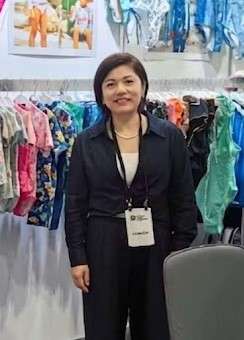
Lily Yu — General Manager, YucaiFJ (Fujian Yucai Industrial Development Co., Ltd.)
General Manager of YucaiFJ – 15 years selecting swimwear fabrics and running production for global DTC and wholesale brands. These are the fabric decisions and cost rules I wish every buyer knew before their first order.
🔗 Lily Yu on LinkedIn · 📧 [email protected] · Factory & Certifications →
Quick Answer
There is no single “best” swimwear fabric — only the best for your customer, use case and price point. That is the honest starting point of any swimwear fabric guide. But after 15 years cutting and sewing swimwear for global brands, here is the rule I give every buyer on day one: for a fashion bikini or one-piece, start with 80% nylon / 20% elastane at 180–200 gsm; for pool training, chlorine-heavy wear or swim schools, switch to polyester/spandex (or PBT) because it shrugs off chlorine 2–3× longer; and for EU or Australian buyers, ask for recycled nylon or GRS-certified recycled polyester and be ready for a higher MOQ. Whichever you pick, order a physical swatch book before you commit to anything — feel, drape and stretch cannot be judged from a photo. Below I give you the full decision matrix, the real numbers (GSM, elastane %, denier, 4-way stretch), and how fabric choice quietly moves your MOQ and unit cost.
Table of Contents
- The Fabric Decision Matrix at a Glance
- How to Choose Fabric by Use Case
- The Numbers Behind the Fabric: GSM, Elastane and Denier
- 4-Way vs 2-Way Stretch, and Why It Matters
- How Fabric Choice Moves Your MOQ and Cost
- Recycled Fabrics and Certifications for EU & US Markets
- The Three-Mistake Checklist Before You Brief a Factory
- Fabric FAQ
The Fabric Decision Matrix at a Glance
When you brief a factory, you compare fabrics across the same five questions: chlorine resistance, colour vibrancy, hand feel, cost and best use. Here is the honest matrix I walk every client through, with real mid-range numbers rather than the “from $2” fantasy you see on B2B platforms.
Tip: on mobile, swipe left / right on the table to compare the full row.
| Fabric | Chlorine resistance | Colour vibrancy | Hand feel | Cost / MOQ | Best use |
|---|---|---|---|---|---|
| Nylon / spandex (80/20) | Low–mid | Excellent | Softest | Standard, low MOQ | Fashion bikinis, resort, one-piece |
| Polyester / spandex | Excellent (2–3× nylon) | Good | Firmer | Standard, low MOQ | Pool training, swim schools, uniforms |
| PBT (specialty polyester) | Superior | Good | Premium | Higher | High-end performance, water parks |
| Recycled nylon (Econyl / Repreve) | Similar to nylon | Excellent | Soft | Higher MOQ (~100 pcs/colour) | Sustainable brands (EU / AU) |
The catch is that these are comparisons, not absolutes. A fashion line and a performance line from the same brand will often use different fabrics — and that is correct. I keep telling buyers not to ask “which fabric is best” but “which fabric is best for my use case, at my MOQ, for my buyer”.
How to Choose Fabric by Use Case
This is the table I wish more buyers sorted by. The use case decides the blend ratio and the finish — not the other way round. Give the factory your customer’s actual wearing situation, not a fabric name.
| Use case | Recommended fabric | Why |
|---|---|---|
| Fashion bikinis / one-piece | Nylon/spandex 180–200 gsm | Soft, vibrant colour, flattering drape |
| Pool training / swim school | Polyester/spandex or PBT 200–240 gsm | Best chlorine and shape retention |
| Surf, rash guards | Quick-dry polyester, UPF finish | Dries fast, blocks sun, abrasion-resistant |
| Kids’ swimwear | Durable, easy-wash nylon/poly blend | Strong colourfastness, forgiving hand |
| Sustainable line | Recycled nylon / GRS recycled polyester | Certified eco story buyers now expect |
| Luxury / boutique | Ribbed, jacquard or a satin/matte finish | Premium texture and a point of difference |
Don’t forget the inner layer. For shapewear or plus-size swimsuits, the outer shell is only half the story. Pair a 190 GSM nylon shell with an internal 140–160 GSM power-mesh lining (85% nylon / 15% elastane) for tummy control, or a lightweight 100 GSM polyester lining for quick-drying fashion pieces. It is the lining that actually delivers the fit you are selling.
Stop second-guessing from a screen. We post a physical YucaiFJ swimwear fabric swatch book with nylon, polyester, recycled and premium finishes so you can feel the GSM, hand and drape before you place a single order. The book is 100% free — we cover standard post, or we can send it on your DHL / FedEx account if you need express delivery within 48 hours.
Request My Free Swatch Book →
The Numbers Behind the Fabric: GSM, Elastane and Denier
Fabric choices come down to three numbers you will hear a thousand times from a factory. Get these right and you turn a vague preference into a repeatable technical spec across reorders.
GSM (grams per square metre). This is the fabric weight, and it drives drape, opacity and durability.
- 180–200 gsm — light, flattering drape; the standard for fashion bikinis and two-piece sets.
- 200–240 gsm — the workhorse; good balance of comfort and durability.
- 240+ gsm — heavy-duty; ideal for competition, frequent use and compression suits.
Elastane (spandex) percentage. Swimwear needs 15–25% elastane for the stretch and recovery a body suit demands. My rule of thumb: 15–18% for fashion pieces (soft hand, keeps its shape), 20%+ for training and athletic one-pieces (compression, resists bagging between laps). The trade-off is real — more elastane costs more and gets harder to sew, so more is not automatically better. Match it to the use case.
Denier. Yarn thickness, and it is where the hand-feel factory reality shows up. A fine 40-denier nylon feels silky and premium for a fashion bikini, but it needs slower machine speeds and a fine 70/10 needle to stop the tender yarn snagging or skipping a stitch. A heavier 70 denier+ yarn is far tougher for a surf suit or rash guard, at the cost of a slightly firmer hand. It is a classic hand-feel-vs-longevity and sewing-ease trade-off, so write the denier into your spec rather than leaving it to the factory.
Insider detail — the number most buyers forget to confirm. Ask for the fabric’s stretch recovery, tested to AATCC / ISO 20932. A suit can feel great dry and bag out the first time it is wet if the recovery is weak. Always write the GSM, fibre blend and elastane % into your tech pack so the next reorder matches the first — that is what separates a professional brand from a one-off. When you read the test report, look for a concrete pass line, not a claim: for stretch recovery, you want at least 92–95% recovery after 30 minutes at full tension (AATCC 135 / ISO 20932); for chlorine fastness under ISO 105-E03, demand Grade 4 or higher out of 5 for pool-heavy lines. A factory that hands you the numbers instead of a vibe is a factory you can reorder from.
4-Way vs 2-Way Stretch, and Why It Matters
Swimwear is not a generic garment. The single most common spec error I see is assuming all stretch is equal. 4-way stretch means the fabric stretches and recovers in both the horizontal (warp) and vertical (weft) direction, which lets the suit follow the body in every direction. 2-way stretch only moves one way. For swimwear you want 4-way — the suit has to move with a torso in the water, not fight it.
This is also where a premium fabric earns its price: a lighter GSM with strong 4-way recovery can feel more luxurious and fit better than a heavy 2-way that pulls against you. When you brief, state “4-way stretch, X% elastane, plus recovery to ISO 20932” — and let the factory confirm it, not assume it. I have seen brands lose a whole season to a bulk order where the “stretch” fabric turned out to be 2-way once it hit the dye house.
How Fabric Choice Moves Your MOQ and Cost
Fabric is the single biggest component of your unit price, and it also shapes your MOQ more than any other decision. Here is the factory-floor logic nobody prints on a catalogue.
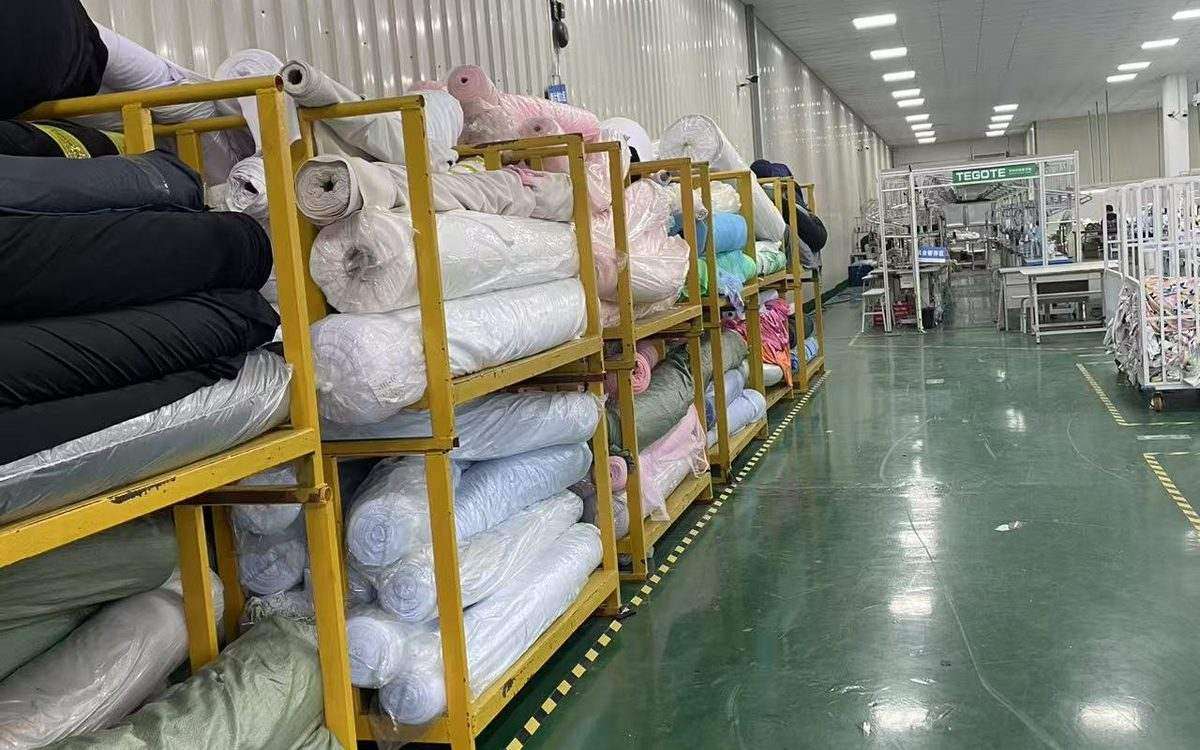
Stocked, standard fabrics (nylon/spandex, polyester/spandex, PBT on a standard roll) let a factory accept a lower MOQ and a shorter lead time because the greige is already on the shelf. Special-order or recycled yarns carry a higher MOQ — often ~100 pieces per colour — because the mill has to run a dedicated yarn batch for you. That is why I always tell buyers to ask which stocked fabrics fit your design before you fall in love with a specialty fabric.
Printing also changes the math. Because we keep white greige nylon and polyester on standard rolls (over 5,000 metres at our Xiamen cutting room), we can digital-sublimation print your design straight onto the white base. That means no dye-vat minimum and no screen plate, so a custom print can run from ~30 pieces. A conventional dye house, by contrast, needs roughly a 150–200 piece colour batch (single solid colour, about 25 kg) before it will run — that is the honest reason the industry norm sits at 300–500 pieces and why big mills refuse orders under 3,000.
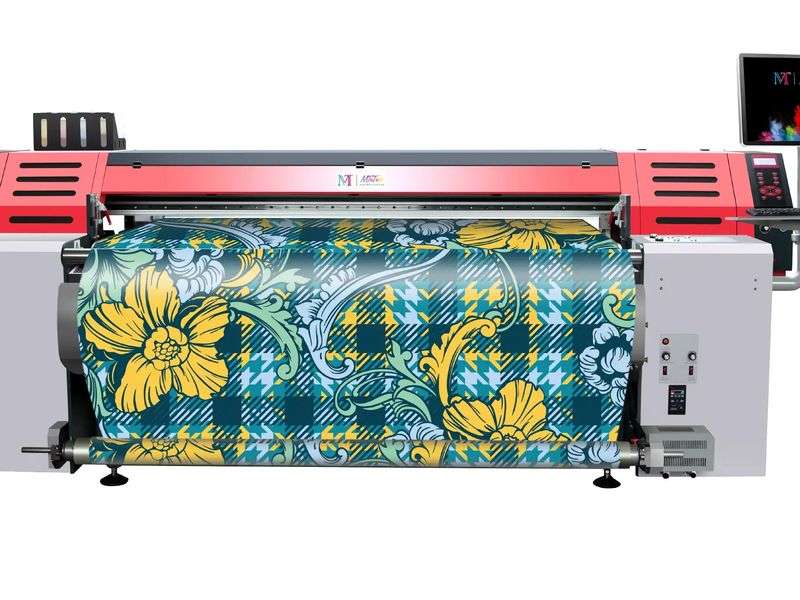
The first-person part. When a new brand comes to me with three custom prints, I do not call a dye house and wait three weeks for a colour to be approved. We load the white fabric straight onto our digital sublimation printers and proof the prints in a matter of days. That is the single biggest reason we can hold a 50-piece custom door open where bigger mills simply will not — and why knowing exactly how a factory reaches its MOQ tells you whether it actually understands its own cost structure.
A cost baseline to sanity-check any quote. To keep your budget honest, here is the relative ladder we see: standard 80/20 nylon/spandex greige sits at our base cost; PBT specialty performance fabric carries roughly a 15–20% premium; certified ECONYL® or Repreve® recycled yarn pushes raw fabric cost up about 30–45% per metre, which translates to a $0.80–$1.50 bump per finished piece. Use that ratio to sanity-check a supplier’s quote — a “recycled” suit priced like virgin nylon is either not actually recycled, or someone is losing money down the line.
Recycled Fabrics and Certifications for EU & US Markets
If your buyers are European or upmarket US retail, the sustainability story is no longer a nice-to-have — it is a line item they will ask about. Two recycled fibres dominate swimwear: recycled nylon (made from ocean waste, fishing nets and industrial plastic, and marketed under brands like ECONYL® and Repreve®) and GRS-certified recycled polyester (from post-consumer plastic bottles). Recycled nylon performs like virgin nylon but costs more and carries a higher MOQ.
How to keep the claim defensible. I cannot stress this enough: if you market OEKO-TEX or GRS, the fabric must carry that certification end-to-end. A real OEKO-TEX Standard 100 certificate is verifiable on the official OEKO-TEX Label Check portal using its 8-digit number. Recycled-content claims should be backed by a Global Recycled Standard (GRS) Transaction Certificate for your specific batch — not just a generic supplier certificate. Without it, a shipment can be flagged for greenwashing during import clearance, and that delay plus penalty costs far more than the fabric you saved on.
The Three-Mistake Checklist Before You Brief a Factory
These three mistakes cost buyers more money than any fabric price difference ever will. Run this checklist before you brief.
- 1. Picking fabric from a photo. Hand feel, drape and stretch cannot be judged on screen. Order swatches first — it is the cheapest decision in the whole development process.
- 2. Ignoring chlorine resistance for a pool-heavy market. The nicest nylon suit will fail fast in a swim school. Know your customer’s real wearing situation.
- 3. Skipping the certification check. If you sell on OEKO-TEX or GRS, the fabric must carry it end-to-end or the claim is not defensible.
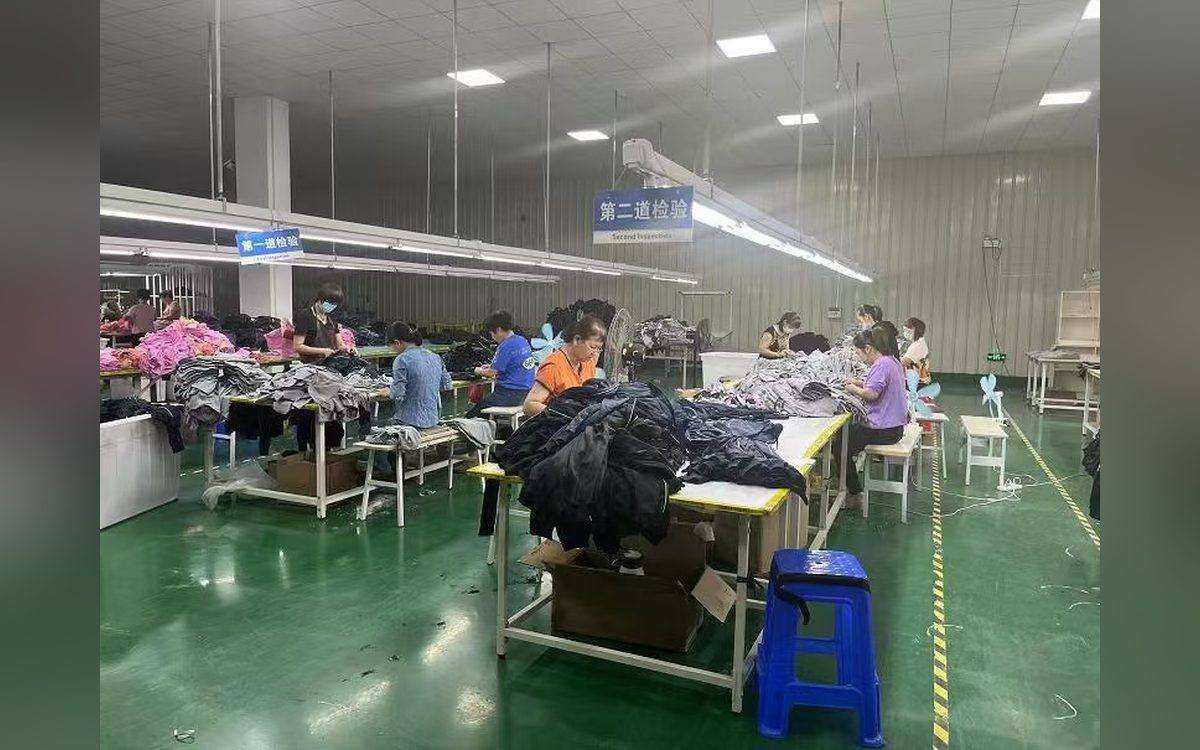
The sequence that keeps fabric decisions cheap: swatch book first → test reports second → then approve the pre-production sample. Feel the hand, confirm GSM and elastane from the labelled swatches, review the lab dip and test results, and only then cut for a bulk run. That order catches problems for pennies instead of thousands.
Ready to move from “which fabric” to a real spec? Send us your use case and target price and I will recommend a stocked fabric that fits your MOQ — or send a message directly and a designer will reply within 4 business hours.
Fabric FAQ
What is the best fabric for swimwear?
There is no single best. For a fashion bikini or one-piece, 80% nylon / 20% elastane at 180–200 gsm gives the softest, most vibrant result. For pool training, swim schools and chlorine-heavy wear, polyester/spandex or PBT lasts 2–3× longer. Match the fabric to the use case, not the other way round.
What GSM should I use for a fashion bikini vs a competition suit?
Fashion bikinis sit in the 180–200 gsm range for a light, flattering drape. Competition and high-frequency suits want 240+ gsm for durability and a supportive fit. The 200–240 gsm band is the all-round workhorse.
How much elastane (spandex) do swimsuits need?
Generally 15–25%. Use 15–18% for fashion pieces so the hand stays soft, and 20%+ for training and athletic one-pieces that need compression and recovery. More elastane costs more and sews harder, so do not overspec for the sake of it.
Nylon vs polyester: which is more chlorine-resistant?
Polyester. It shrugs off chlorine roughly 2–3× longer than nylon and keeps its shape and colour in a pool. Nylon is softer and takes colour more vibrantly, so it is better for fashion wear that sees less chlorine.
Does the fabric choice change my MOQ and cost?
Yes, noticeably. Standard stocked fabrics keep your MOQ low and lead time short; special-order or recycled yarns push the MOQ up (often ~100 pieces per colour) and raise your unit price. That extra upfront cost can pay off for a sustainable brand positioning.
Are your recycled fabrics (Econyl / Repreve) certified?
Yes — recycled nylon and GRS-certified recycled polyester are available as stocked programmes, which keeps the sustainable option close to a standard MOQ. If you plan to market the certification, we confirm the Certificate and GRS Transaction Certificate accompany your specific batch.
Do I need a swatch book before placing an order?
Yes. Ordering a physical swatch book before the sample stage is the cheapest decision in the whole process. It lets you feel the hand, check the weight and compare the price before any fabric is cut. Ask your factory for a stocked swatch library — most, including YucaiFJ, keep one.
How do I verify fabric certifications (OEKO-TEX / GRS)?
Look up the OEKO-TEX Standard 100 number on the official label-check portal, and ask for a GRS Transaction Certificate for your specific batch. Any serious supplier hands these over without hesitation — if they will not, treat it as a red flag.