
Lily Yu — General Manager, YucaiFJ (Fujian Yucai Industrial Development Co., Ltd.)
General manager of YucaiFJ — 15 years producing one-piece swimsuits for global DTC and wholesale brands. These are the factory-floor rules and cost numbers I wish every buyer knew before their first order.
🔗 Lily Yu on LinkedIn · 📧 [email protected] · Our One-Piece Swimsuits →
Quick Answer
A one-piece swimsuit is not a bikini with more fabric — it is a harder garment to make. The technical difference is the torso: a bikini only has to follow the bust and hip, but a one-piece must fit the whole body length from shoulder through crotch and back to the shoulder. Get that wrong and a tall buyer gets strap-dig / crotch-pinch, a short buyer gets bagging at the tummy, and everyone returns the suit. In our Xiamen factory a standard one-piece runs 180 to 230 GSM fabric, takes about 35–45 days from approved sample to bulk shipment, and starts at 50 pieces per colourway. Bulk FOB China sits around $5.50–$8.50 per piece for a classic style before print, trim and custom sampling. Below I break down the six stages that actually decide whether your one-piece looks retail-grade or gets returned.
Table of Contents
- Why One-Piece Swimsuits Are Harder to Make Than Bikinis
- The One-Piece Manufacturing Process, Stage by Stage
- Fabric Choice for One-Piece: Stretch Recovery, Chlorine & Sustainability
- Torso Fit, Pattern and Grading
- Cutting and Print Placement: Avoiding Pattern Displacement
- Sewing and Internal Structure: The Parts Buyers Never See
- Insider: 3 Supply-Chain Rules That Save Wasted Money
- MOQ, Lead Time and the Real Cost Breakdown
- Quality Control and Premium Packaging
- FAQ
Why One-Piece Swimsuits Are Harder to Make Than Bikinis
Every new brand asks me why a one-piece costs more than a comparable bikini when it looks like “less work.” The honest answer: a bikini has two independent panels that each only need to follow one body curve, while a one-piece is a single continuous shell that has to follow the bust, the waist, the hip and the full torso length all at once. That single fact creates three engineering problems a bikini never faces.
- The longitudinal tolerance problem. On a one-piece, if the vertical torso length is off by even a few millimetres, the fit breaks. A bikini top that is slightly short just sits a little higher; a one-piece that is slightly short digs into the shoulders and crotch. We grade the torso length non-linearly as sizes go up — a plus-size body is not a scaled-up small, it has a proportionally longer torso, so straight linear grading creates exactly the strap-dig you are trying to avoid.
- The shaping problem. One-piece buyers overwhelmingly want a smooth tummy line. That means internal shaping — a power-mesh or compression panel stitched into the lining, or a double-layer front — which adds sewing steps, more fabric, and a much more fiddly assembly than a simple bikini panel.
- The print placement problem. A one-piece is one large, continuous surface, so a repeated or placement print has to line up cleanly across the front without a gap or wobble at the bust, waist or crotch. A bikini has small patches where a mis-registered print is barely noticeable; a one-piece highlights every flaw.
That is the real reason one-piece suits sit at the higher end of the FOB range. To give you a feel, here is a typical manufacturing-difficulty scale we quote against:
| One-Piece Style | Difficulty | What Makes It Hard |
|---|---|---|
| Classic / basic scoop one-piece | Lowest | Just an even elastic return on the neck and leg openings; clean seams |
| Racerback / athletic one-piece | Medium | Chlorine-resistant PBT fabric plus flatlock or seamless seams to stop friction rash |
| High-cut / maillot one-piece | Medium–high | Leg-opening curve and higher cut demand precise elastic stretch ratios |
| Plunge deep-V / backless one-piece | Highest | Large open areas easily gape or buckle; needs side-seam boning or firming tape |
| Plus-size / curve one-piece | High | Non-linear torso grading plus extra shaping panels |
You can flip through the exact one-piece silhouettes we run at a 50-piece MOQ — classic, racerback, high-cut and plunge — over on our one-piece swimsuit collection page.
The One-Piece Manufacturing Process, Stage by Stage
We break a one-piece into roughly six production stages (the full factory count runs past a hundred individual micro-operations, but these are the ones that move the needle on quality and cost). If you ever sit on a factory video call, this is the sequence you should see.
- Tech pack & spec sheet. Your design, measurements, seam types, fabric and trims, written down. A clean tech pack is the difference between a good sample and a bad one — the single most common reason a first sample comes back wrong is a vague spec, not a bad factory.
- Pattern making & grading. We make a paper (or digital) block for your size, then grade it across your size range. For a one-piece this means building the torso drop into the pattern as a shaped curve, not a constant.
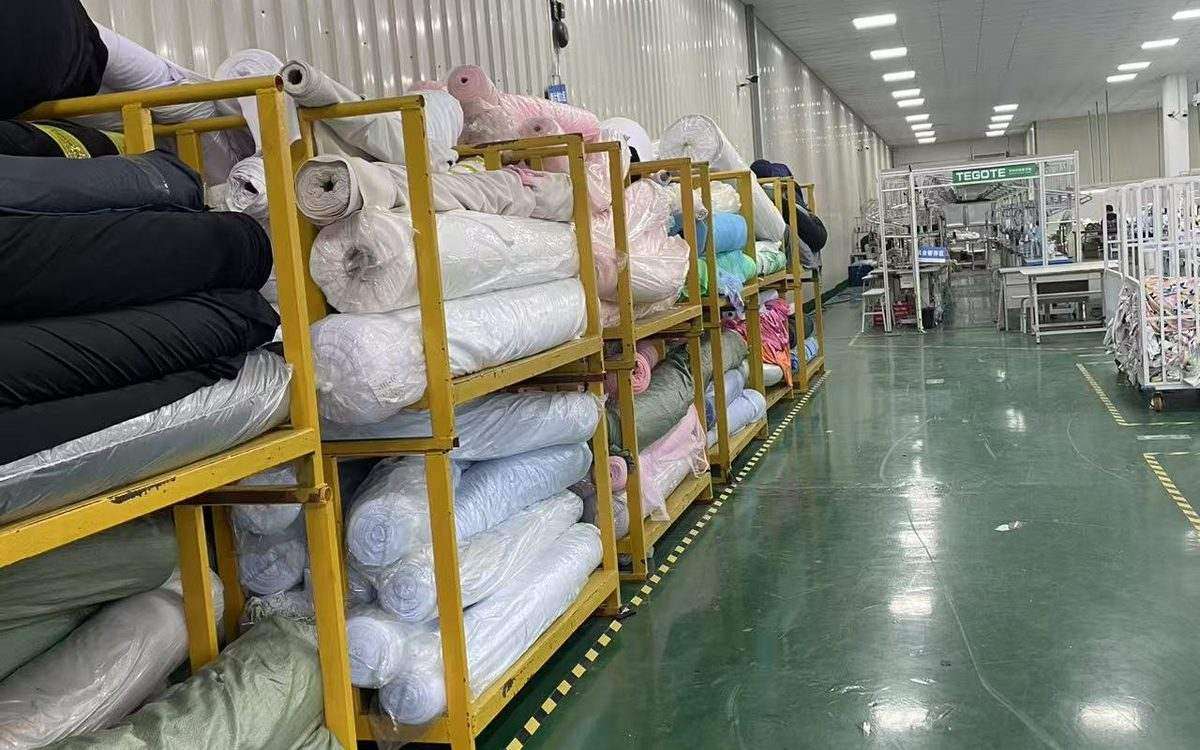
- Fabric selection. The fabric is cut to a chosen GSM, and for a one-piece we usually line the body so it is not sheer when wet and holds shape.
- Cutting. Fabric is laid and cut. One-piece panels are large, so this is where print placement and pattern matching are checked.
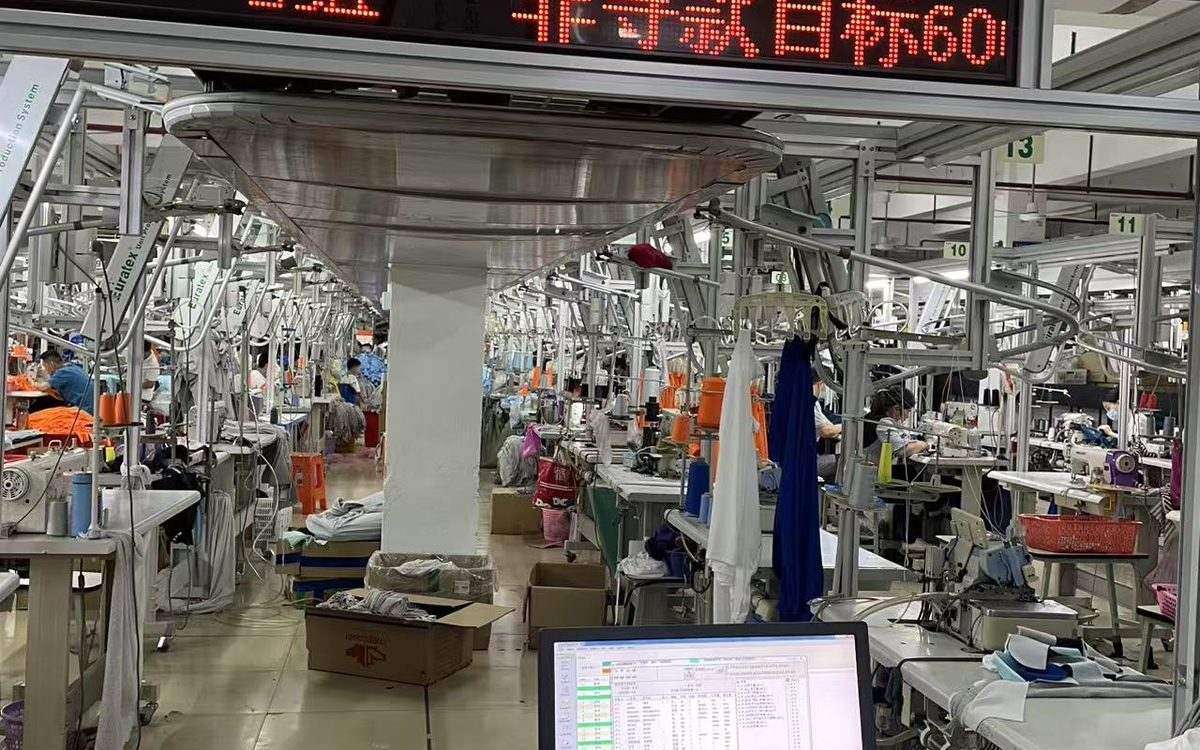
- Sewing & assembly. Panels are joined, elastics set, internal cups / shelf bra added, hemmed. This is the longest stage and where most of the labour cost sits.
- QC, pressing & packing. Inspection against AQL, then pressing, labeling, sanitised liner, and packing.
If you want the full technical detail behind each of the middle stages, jump to the sewing and structure and cutting sections below — those are where a one-piece lives or dies.
Fabric Choice for One-Piece: Stretch Recovery, Chlorine & Sustainability
Fabric is the biggest single cost driver on a one-piece because you need more of it than a bikini, and it has to perform across the whole body. Three properties matter most, and they are measurable.
- Stretch recovery. A swimwear fabric should return to shape after stretching. We look for at least 8% elastane (spandex), and the industry sweet spot for a flattering one-piece is 10–20%. Below that the suit bags at the tummy and knees; far above that it can feel too heavy.
- Chlorine resistance. If your buyer lists “pool-ready,” chlorine matters more than softness. Polyester/PBT blends hold up to hundreds of hours of chlorinated water, far beyond a standard nylon/spandex suit.
- UPF and sustainability. For resort and eco lines, UPF 50+ and recycled content (ECONYL®, Repreve®) are what your retail buyer will ask to see on the certificate.
Here is the decision matrix we use when a brand has not decided the fabric yet:
| Fabric | Best For | Stretch Recovery | Chlorine / UV | Relative Cost |
|---|---|---|---|---|
| Nylon + 18–20% spandex | Soft fashion one-pieces, rich colour | Excellent, soft hand | Lower chlorine, can bleach in sun | Medium |
| Polyester / PBT blend | Training, pool, colourfast one-pieces | Very good, holds print | Excellent (200+ hrs chlorine, UPF 50+) | Medium |
| Recycled nylon (ECONYL®) | Premium eco lines, EU/UK retail | Matches virgin nylon | Good, requires certified batch | High |
| Recycled polyester (Repreve®) | Rashguard, eco sport | Very good | Excellent (UPF 50+) | Medium–high |
If you are quoting a European order, get the GRS Transaction Certificate for your specific batch for any recycled claim — a generic supplier certificate is not enough and can flag a shipment during import clearance. See our sustainable swimwear options →
Torso Fit, Pattern and Grading
This is the section that separates a real one-piece maker from a wetsuit factory. The key measurement is the torso length: the distance from the highest point of the shoulder, down through the crotch, and back up to the shoulder on the other side. On a one-piece this single number governs how the whole garment sits. The common failure modes are:
| Problem | Cause | Fix |
|---|---|---|
| Tall buyer: straps dig, crotch pulls | Torso graded too short / linearly | Grade torso length non-linearly as sizes rise |
| Short buyer: fabric bags at tummy | Pattern has excess torso drop | Reduce torso drop, add a shaped waist point |
| Bust lacks support | No internal cup / shelf structure | Add foam cups or a power-mesh shelf bra |
| Side gapes on a plunge cut | Open front + high stretch and no firming | Side-seam boning or firming tape |
Here is a grading rule of thumb we use in-house. On a one-piece we grade the torso length non-linearly across sizes: roughly +2 to 2.5 cm between the smallest sizes, where the fit is forgiving, then +3 to 3.5 cm between the larger sizes, where the body carries more depth — an XL is not a simple scaled-up S, which is exactly how a straight linear grade produces strap-dig on a plus-size body. We then hold the underbust seam, cup height and leg opening to a +/−0.3 mm tolerance on the production pattern. Ask your factory for its own grading chart; a supplier that cannot show one is estimating.
On a production grade, we hold key seams to a close tolerance. The three that matter most on a one-piece are the underbust seam, the cup height, and the leg opening — the ones a buyer notices first if a suit fits badly. When you give feedback on a fit sample, give a number, not an adjective: say “raise the leg opening by 1.5 cm,” not “it feels tight.” That single habit cuts your sampling rounds from three or four to one or two.
Cutting and Print Placement: Avoiding Pattern Displacement
High-stretch swim fabric is slippery and hard to hold still, and a one-piece has big panels, which makes this stage genuinely tricky. Two things to ask a factory about:
- Single-layer cutting. Because the fabric stretches and shifts, we cut swimwear in single layers rather than stacked, using a rotary cutter and pressure to keep the panel flat. It is slower but it is how you stop a slightly skewed panel that shows as a twisted side seam.
- Print placement, right side up. For a placement or directional print, the fabric is laid right side facing up so the pattern lines up on the front. On a one-piece, a misplaced print is obvious at the bust, waist or crotch — so this is checked before cutting, not after.
Ask a potential supplier directly: “do you cut single-layer, and do you orient the print right-side-up before cutting a placement one-piece?” A factory that says yes and explains why is telling you it understands the product; one that hesitates is a red flag.
Sewing and Internal Structure: The Parts Buyers Never See
Here is where a one-piece earns its price. Most of the quality lives in invisible internal construction. At our line, the three things that matter are:
1. Elastic retention ratio. On the neck and leg openings we sew elastic that is deliberately cut shorter than the opening — roughly 25% shorter — then stretched and sewn evenly so the suit hugs without sagging. Get the ratio wrong and the opening either pings open or gathers. This is the single most common novice mistake in swimwear.
2. High-stretch seaming. A swim suit has to snap back after being pulled. We use a flatlock or four-needle-six-thread seam on high-stretch areas and a serger (three-needle five-thread) with a set allowance elsewhere, so the seam stretches with the fabric instead of breaking. Cheap surfers’ suits snap on the first big stretch — that is this seam, done badly.
3. Internal support and shaping. A one-piece that looks great on the hanger and falls down in the water lacks structure. We build a shelf bra from a power mesh cut smaller than the outer fabric, so it supports without a wire, and we insert pre-molded foam cups into the hidden lining pocket after the main body is heat-pressed — a hot press can collapse cup density by roughly 15–20%, so the cups go in last to keep their shape. For a plunge or backless style we insert a flexible 4 mm high-density boning into the side seam so the front does not gape during movement, rather than relying on stretch alone.
Insider: 3 Supply-Chain Rules That Save Wasted Money
These three come from fifteen years of watching brands lose money before they ever reach a cost negotiation.
Rule 1 — Garment MOQ is not fabric MOQ. A factory may quote you a 50-piece garment MOQ, but if you want a custom-dyed or printed fabric, the fabric mill likely has a far higher minimum. The practical workaround at small volume is to select from the factory’s stock grey fabric and print by sublimation, so you skip the dye-vat minimum. Ask how each minimum is met below the “headline” MOQ.
Rule 2 — Never send “feels too tight.” Give absolute metrics on a fit revision: “raise the leg opening by 1.5 cm” or “shorten the shoulder strap by 1 cm.” Vague feedback adds sampling rounds, which costs you both time and sample fees, and drowns the good signal.
Rule 3 — Beware sourcing hubs with no fabric infrastructure. A social-media-famous sourcing location with poor local access to chemical fibres and components means every trim and fabric has to be imported a second time, which quietly inflates cost. For scaled production, an established Chinese or European industrial base is the more predictable route.
MOQ, Lead Time and the Real Cost Breakdown
Here are the numbers we quote most often. Use them as a sanity check, not a fixed price — print, trim, sampling and custom hardware all move a quote.
| Quantity (per colourway) | Typical Lead Time | Unit Cost Trend |
|---|---|---|
| 50–99 pcs (low-MOQ test) | ~3 weeks after sample approval | Highest per unit — carries set-up |
| 100–199 pcs | ~1 to 1.5 months | Mid — set-up amortises |
| 200–499 pcs | ~1.5 to 2 months | Lower per unit |
| 500+ pcs | ~2 to 4 months (PP sample + QC + stretch tests) | Lowest per unit |
On price, a simple classic one-piece runs roughly $5.50–$8.50 FOB; add print, premium or sustainable fabric and it rises. Sampling is a one-time cost, typically $50–$100 per style, and we offset that fee against your first bulk order once it reaches the quantity on your quote — so the sample is effectively free when you confirm production. Bulk payment is split: a deposit on sample or PP approval, then the balance against a passing third-party AQL 2.5 inspection before loading. Our standard sample turn is 48–72 hours after your tech pack is approved. Read more on swimwear production lead times →
Quality Control and Premium Packaging
Small orders are exactly the ones a weak supplier might route to a low-tier line, so set the gate in writing. Three controls protect you:
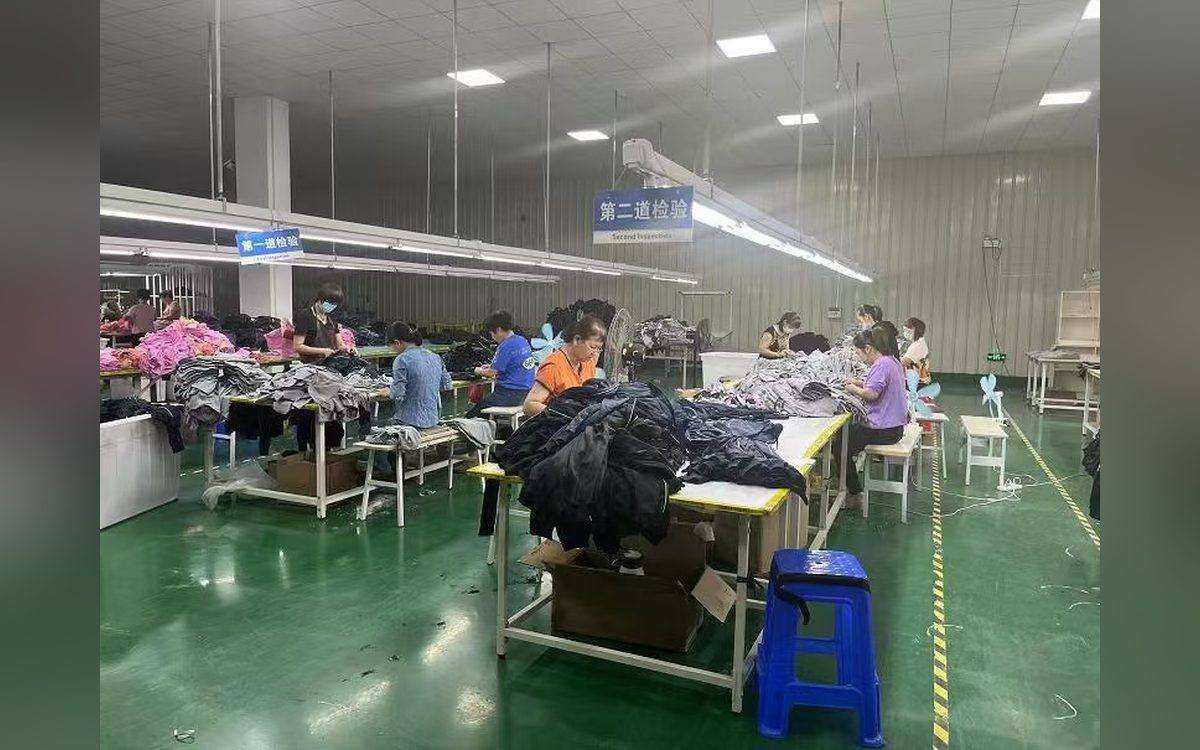
- Ask for the three-line QC by name. IQC checks incoming fabric for GSM, colour fastness and stretch recovery before cutting; IPQC inspects during sewing, especially the high-stretch seams; FQC is the finished-goods audit. A factory that can name all three is not improvising.
- Sign off a lab dip and a PP (pre-production) sample. Approve the sample made in the real production fabric with the real print before bulk cutting. This kills the number-one complaint: “the bulk does not match the sample.”
- Release final payment on a third-party AQL 2.5 inspection. Put it in the contract so the last instalment only clears after an independent pre-shipment inspection shows defects within AQL 2.5. Add a strap stretch test — pull the shoulder strap to roughly 2.5 cm of yield and check it returns — to catch a loose strap before it ships.
For a premium order, packaging sells the brand: a sturdy 300 GSM hang tag, and a sanitised crotch liner — a branded plastic liner or a compostable kraft liner if your buyer ticks the eco box. These are small line items that make a one-piece feel retail-ready.
Get a Real One-Piece Quote Within 4 Business Hours
Whether you have a finished tech pack or just a sketch, send us your one-piece styles, target fabric, size range and quantity. We will come back with an itemised cost breakdown, MOQ options, our certifications, and a scheduled live video factory tour.
Not ready for a quote yet? Request our free swimwear fabric swatch kit — over 20 ECONYL®, Repreve® and chlorine-resistant PBT swatches with GRS docs — or our one-piece tech pack spec-sheet template. Just ask and we will email it over.
Request Your One-Piece Quote →
We reply within 4 business hours, with MOQ, lead time and an itemised price breakdown.
FAQ
What is the minimum order quantity for a custom one-piece swimsuit?
In our factory a custom one-piece starts at 50 pieces per colourway. The real minimum, though, is the largest of your fabric, print, trim and label minimums — which is why a low-MOQ quote is only credible if the supplier can explain how the fabric and print minimums are covered.
How long does it take to manufacture one-piece swimsuits?
From an approved sample, a 50–99 piece order runs about 3 weeks, 100–199 pieces roughly 1–1.5 months, and 500+ pieces about 2–4 months once you include a pre-production sample, bulk cutting and stretch-recovery QC.
Why are one-piece swimsuits harder to make than bikinis?
Because a one-piece is a single continuous shell that must fit the whole torso length, not just the bust and hip. That adds non-linear torso grading, internal shaping panels, and careful print placement — three problems a bikini never has to solve.
What fabric is best for a chlorine-resistant one-piece?
A polyester/PBT blend holds colour and shape through many hours of chlorinated water, far beyond standard nylon/spandex. For an eco line, choose certified recycled nylon (ECONYL®) with a GRS Transaction Certificate for your specific batch.
How do I give useful fit feedback on a one-piece sample?
Give absolute metrics, not adjectives. Say “raise the leg opening by 1.5 cm” or “shorten the shoulder strap by 1 cm” rather than “it feels tight.” Numbers cut your sampling rounds from three or four down to one or two.
What should I check to avoid a print pattern shifting on a one-piece?
Ask whether the factory cuts single-layer and orients a placement print right-side-up before cutting. A one-piece is one large surface, so a mis-registered print is obvious at the bust, waist or crotch.
Why do sample fees get charged, and can they be refunded?
A sample fee covers pattern making, a small fabric cut, labour and one round of fit adjustment. In our factory the fee is a one-time cost and is refundable against your bulk order by agreement.
What is the best time of year to order one-piece swimsuits to keep MOQs low?
Negotiate in the off-season — roughly July to August, or just after Chinese New Year in February — when factories need work to keep their skilled seam operators, so they are more willing to take a smaller order.
Ready to Build a One-Piece Line That Fits?
The factory you pick matters more than the model name. At YucaiFJ we make one-pieces start to finish in Xiamen — torso grading, internal shaping, chlorine-resistant fabrics, and an AQL 2.5 gate on every order — and we hold a genuine 50-piece custom MOQ. Send us your designs and we will tell you exactly what they will cost to make.
Talk to Lily About Your One-Piece Collection →
Replies within 4 business hours. Free fabric & trim swatch book on request.