Short answer: color and print development usually starts with a lab dip or digital print proof, then moves to a sample for approval before bulk production. YucaiFJ has an in-house dyehouse and digital printing line, so color matching and print sampling happen in one factory.
Learn more: custom swimwear design service · Related: sampling process.
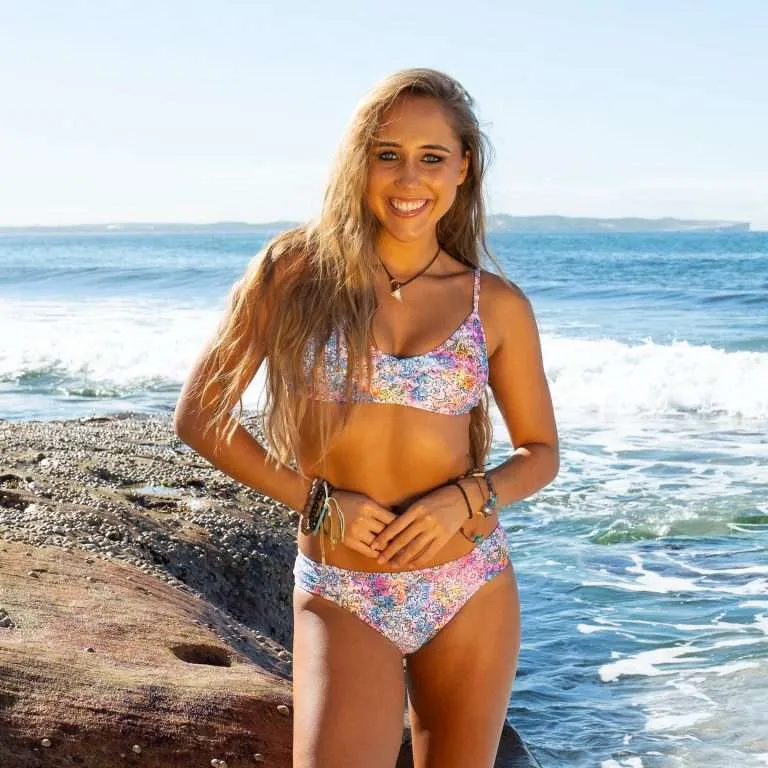
This guide explains the steps, the files you need and how to avoid the most common approval delays.
Color Development: From Pantone to Lab Dip
1. Send your color reference
The best references are Pantone codes, physical fabric swatches or approved brand color files. Photos on a phone screen are usually not accurate enough.
2. Lab dip approval
The factory creates a small dyed fabric swatch to match your target color. Approve the lab dip before production so the bulk fabric is dyed once.
3. Bulk dyeing
After approval, the fabric is dyed in production batches. YucaiFJ uses an in-house dyehouse with REACH-compliant dye chemicals and eco-friendly dyeing processes.
Print Development: From Artwork to Print Proof
1. Prepare print-ready artwork
Send high-resolution artwork with the correct dimensions, repeat pattern and color separation. A vector file or high-quality PDF is best.
2. Digital print proof
The factory prints a small proof so you can check color, scale and repeat accuracy before bulk printing.
3. Print method confirmation
Common methods include digital printing and sublimation. YucaiFJ operates digital fabric printing machines and can confirm the best method for your fabric and design.
4. Sample approval
The final print sample is made with your fabric, color and print together. Approve this sample before production starts.
What to Send With Your Brief
- Pantone codes or physical color swatches
- Print artwork in high resolution
- Pattern repeat and placement instructions
- Colorfastness requirements
- Target fabric or GSM
- Quantity per colorway
Common Approval Mistakes
- Approving color from a screen instead of a physical swatch
- Changing print scale after the sample is approved
- Sending low-resolution artwork
- Not specifying colorfastness for chlorine or sunlight
- Adding new colors after bulk dyeing starts
Each change adds time and cost. A complete brief is the fastest way to get the color and print you want.
Print Methods Compared: Which One Fits Your Design?
The print method changes your cost, colorfastness and the minimum quantity. Here is the practical comparison for swimwear.
| Method | Cost per piece | Colorfastness | Best for | Considerations |
|---|---|---|---|---|
| Digital / sublimation print | Low-to-mid at volume | High on polyester; on nylon it needs a bonding layer | All-over colorful patterns on polyester | Vibrant on light fabrics; white areas need pre-treatment |
| Screen / plastisol print | Mid, one-time screen cost | Good, depends on ink | Simple logos, small placement prints | Stiffer hand feel; separate screens per color |
| Heat transfer | Low, quick | Medium; can crack with stretch | Low-volume runs, sampling | Least premium; avoid on high-stretch areas |
| Woven jacquard | Higher | Excellent | Premium lines, no print but pattern woven in | Higher MOQ and lead time |
For swimwear that will see chlorine and sun, we recommend sublimation on polyester or a bonded digital print on nylon, and confirming the print colorfastness with the same standards as the base fabric.
Color Tolerance: When Is a Lab Dip “Approved”?
A lab dip should be judged against your reference, not against your memory of it. The industry working rule is a Delta-E of 1.5 or below against the Pantone or physical reference, with the final judge being a physical swatch under standard daylight (D65). Ask your factory to grade the dip (A = excellent match, D = poor) and to keep one approved physical master for both sides. Never approve color from a phone screen: screens shift hue, and the difference costs a full bulk re-dye.
What Drives Your Print Cost
- Coverage: all-over prints cost more than small placement prints.
- Colors: more screens (for screen print) or larger ink coverage (digital) raise cost.
- Artwork quality: low-resolution files cause re-printing and delays; send 300 DPI or vector.
- Repeat size: larger pattern repeats can waste fabric if not planned with the marker.
Sending print-ready artwork with the repeat direction and placement marked removes most of the guesswork and the cost surprises.
Eco Considerations for Prints
REACH-compliant inks and low-water digital printing are increasingly required for EU and Australian retail. If your brand markets sustainability, ask for the ink and dye compliance documentation up front, and confirm whether your print method allows recycled fabric certification (GRS). YucaiFJ operates digital printing and an in-house dyehouse with REACH-compliant chemicals, so color and print development stay under one roof.
Files You Must Send for Print Development
- Artwork at 300 DPI actual print size, or a vector file for large repeats.
- Pantone references for each color in the design.
- Repeat direction (horizontal / vertical) and scale shown on the mock-up.
- Placement: all-over, center chest, side seam, or trim-only.
- Any white-space treatment required (on nylon prints).
Missing artwork is the #1 cause of print sampling delays. Sending the file set above gets you a correct first proof.
When to Order a Strike-Off
A strike-off is a short length of printed fabric used to judge color and repeat before you commit to a full sample. Order one when your design has many colors, a large repeat, or a color-critical brand palette. It costs little and prevents an expensive “the print is wrong” surprise at the sample stage.
Print Approval FAQs
Can I approve the print from a screen photo?
Use a screen photo to check design layout and repeat, but judge color on a physical strike-off or sample under daylight. Screens shift hue and brightness.
What if I want to change the scale after approval?
Scaling changes the repeat and the fabric marker, so it is treated as a new print approval. It is much cheaper to confirm scale before the strike-off than after.
What if my Pantone reference is out of stock or discontinued?
Send a physical swatch of the previous production or a similar approved sample. The lab can match by densitometer to the physical reference even when the Pantone code is retired, and you keep one physical master on file for future orders.
Can I run the same print on a different fabric later?
Yes, but colors shift between fabric bases, especially from polyester to nylon. Re-run a strike-off on the new base and re-approve before bulk, even if the artwork is identical.
FAQ
Do you do custom color matching?
Yes. YucaiFJ provides custom color matching through its in-house dyehouse.
Can you print custom designs on swimwear?
Yes. Digital printing and sublimation are available for custom swimwear designs.
How do I send my color reference?
Send Pantone codes or physical swatches. A lab dip will confirm the closest match before production.
Are your dyes compliant with EU standards?
Yes. YucaiFJ uses REACH-compliant dye chemicals and eco-friendly dyeing processes.
Start Your Color and Print Development
Send your color references and print artwork to our B2B team, and we will confirm the development plan and sample timeline.
- Email: [email protected]
- WhatsApp: +86 159 6009 9446